 how-to
How to Reduce Leg Swelling Naturally: 7 Steps That Work
Table of Contents
- Why Your Legs Swell: Causes of Edema and Fluid Retention
- Step 1: Elevate Your Legs Above the Heart
- Step 2: Use Compression Garments Correctly
- Step 3: How to Improve Blood Flow in Legs Through Movement
- Step 4: Foods That Boost Nitric Oxide and Cut Sodium
- Step 5: Epsom Salt Baths and Therapeutic Massage
- Step 6: Sleep Position and Post-Travel Swelling Fixes
- Step 7: Nitric Oxide Supplement Safety and Medication Interactions
- Frequently Asked Questions
Last Updated: October 7, 2026
Why Your Legs Swell: Causes of Edema and Fluid Retention
Swelling in the lower legs happens when fluid builds up in the tissues, a condition doctors call edema.
Everyday causes are common. Long sitting, salty meals, warm weather, and hormone shifts all play a role. So does a sedentary lifestyle.
Venous insufficiency is different. The valves inside your leg veins weaken, so blood slips backward instead of returning to the heart.
Red Flag Symptoms That Need Medical Attention
Most leg swelling is harmless. Some is not. Seek care right away if you notice:
- Swelling in one leg only, especially with pain or warmth
- Shortness of breath or chest pain
- Skin that turns red, hot, or blistered
- Swelling that starts suddenly and does not improve overnight
- Pitting edema, where a pressed finger leaves a dent
These signs can point to a blood clot, heart failure, or kidney problems. Do not wait them out.
Step 1: Elevate Your Legs Above the Heart
Lie down and raise your legs above heart level. This uses gravity to help fluid drain back toward your core. Aim for 15 to 20 minutes, three or four times a day.
Prop your feet on pillows, not just a footstool. The goal is ankles higher than your chest. Do this after long sitting or standing.
Step 2: Use Compression Garments Correctly
Compression stockings squeeze the leg gently to push fluid upward. They work best when fitted properly. A loose sock does nothing. A too-tight one can cut circulation.
Ask a pharmacist or vascular specialist about the right pressure level for you. Put them on first thing in the morning, before swelling builds. Check the FDA guidance on compression stockings for how these devices are regulated.
Swelling Level | Suggested Compression | When to Wear |
|---|---|---|
Mild, occasional | 15-20 mmHg | Travel or long sitting |
Moderate, daily | 20-30 mmHg | Morning to evening |
Chronic, venous | 30-40 mmHg | As advised by a clinician |
Step 3: How to Improve Blood Flow in Legs Through Movement
Muscles in your calves act as pumps. Every step squeezes veins and pushes blood back to your heart. Movement is one of the most effective ways to improve blood flow in legs.

Walk for 10 to 15 minutes every hour or two. If you sit for work, set a timer. Even short walks help.
Ankle Pumps and Calf Raises You Can Do Anywhere
- Ankle pumps: Point toes down, then flex up. Repeat 20 times.
- Calf raises: Rise onto your toes, hold two seconds, lower. Do 15 reps.
- Leg extensions: Straighten one leg while seated, hold five seconds, switch.
- Marching in place: Lift knees high for one minute.
Do these three times a day. They take under five minutes total.
Step 4: Foods That Boost Nitric Oxide and Cut Sodium
Cut sodium and add foods that boost nitric oxide. Sodium makes your body hold water. Potassium helps flush it out. Together, they shape your fluid balance.
Aim for less than 2,300 mg of sodium daily, per Dietary Guidelines for Americans. Cook at home when you can. Restaurant food hides a lot of salt.
Potassium-Rich Foods and Hydration Basics
Potassium-rich foods support electrolyte balance and healthy blood pressure:
- Bananas, oranges, and avocados
- Spinach, sweet potatoes, and white beans
- Tomatoes and beetroot
Beetroot is a popular nitric oxide source. It works, but it is not the only path. The body also makes nitric oxide through the eNOS pathway, which uses L-arginine and L-citrulline. We will come back to that.
Drink water steadily through the day. Dehydration makes your body cling to fluid, which worsens swelling.
Step 5: Epsom Salt Baths and Therapeutic Massage
An Epsom salt bath uses magnesium sulfate, which may ease swelling and soreness. Add two cups to a warm bath and soak for 15 minutes. Keep the water warm, not hot, since heat can increase swelling for some people.
Therapeutic massage helps move lymph fluid. Stroke upward, from ankle toward knee, with light pressure. A lymphatic drainage massage from a trained therapist can help chronic swelling.
Step 6: Sleep Position and Post-Travel Swelling Fixes
Most articles tell you to elevate your legs and leave it there. The details matter more than the general advice, especially for sleep position and post-travel recovery.
Sleep Position by Sleeper Type
How you sleep changes which pillow setup actually works.
- Back sleepers: Place a firm wedge pillow under your calves so your ankles sit a few inches above your heart. A single flat pillow under the feet is usually not enough. A wedge rated for 7 to 10 inches of lift tends to work better than stacked bed pillows, which slide and lose height overnight.
- Side sleepers: Sleep on your left side when possible. The inferior vena cava, the large vein that returns blood from the lower body, runs slightly to the right of the spine. Lying on the left reduces pressure on it and can improve return flow. Tuck a pillow between your knees to keep hips stacked, and place a second pillow under your lower calves so the ankles stay slightly raised.
- Stomach sleepers: This position is the hardest for leg swelling because the legs sit flat and the neck is twisted. If you cannot switch, place a thin pillow under your shins and keep one knee slightly bent. Consider training yourself to shift to your side over a few weeks.
Individual results vary.
Post-Travel Swelling: A Concrete Protocol
Long flights and car rides are a top trigger for leg swelling because the calf pump goes idle for hours. Blood pools, and the ankles can visibly swell by the time you land.
Before you travel:
- Put on 15-20 mmHg compression socks before you leave the house, not after swelling starts.
- Hydrate well the day before. Skip alcohol and salty airport or gas-station food.
- Choose an aisle seat when you can, so standing up does not require climbing over anyone.
During travel:
- Stand and walk the aisle every 60 to 90 minutes on flights. On road trips, pull over every 90 minutes and take a 5-minute walk.
- Do ankle pumps and calf raises in your seat between walks. Twenty pumps every half hour keeps the calf pump active.
- Drink water steadily. Aim for about 8 ounces per hour of travel.
- Avoid crossing your legs. It compresses the veins behind the knee and slows return flow.
After you arrive:
- Elevate your legs above heart level for 20 minutes as soon as you can.
- Take a short walk, even 10 minutes, to restart circulation.
- Rehydrate and eat a low-sodium meal. Restaurant and airport food tends to run high in sodium.
- Keep compression socks on for another hour or two if swelling is noticeable.
If swelling after travel is one-sided, painful, or warm to the touch, treat it as a red flag and seek care rather than waiting it out.
Step 7: Nitric Oxide Supplement Safety and Medication Interactions
Nitric oxide is a signaling molecule your blood vessel walls use to relax and widen. The body makes it primarily through the eNOS pathway, eNOS stands for endothelial nitric oxide synthase, the enzyme that converts L-arginine into nitric oxide inside the endothelium.
That biology matters because anything that boosts nitric oxide can also amplify the effect of medications that already lower blood pressure or thin the blood.
Medication Interactions to Discuss With a Clinician
A common pattern is that people start a nitric oxide supplement without mentioning it to the prescriber managing their other medications. That is the interaction risk.
- Blood pressure medications (ACE inhibitors, ARBs, calcium channel blockers, diuretics): Stacking a nitric oxide booster on top can push blood pressure lower than intended. Watch for dizziness on standing, lightheadedness, or unusual fatigue.
- Blood thinners (warfarin, apixaban, rivaroxaban, aspirin): Some botanicals and high-dose amino acids can add to bleeding risk. This combination deserves a conversation before you start.
- Diabetes medications: Nitric oxide support can influence blood sugar and blood pressure together. If you take insulin or oral agents, monitor readings more closely when starting anything new.
- Erectile dysfunction drugs (sildenafil, tadalafil): These already act on the nitric oxide pathway. Combining them with a nitric oxide booster can cause a sharp drop in blood pressure.
- Nitrate medications for chest pain: Do not combine with nitric oxide boosters without explicit medical clearance.
How to Talk to Your Prescriber
Bring the actual supplement label, not just the name. Prescribers need to see the ingredient list and doses of L-arginine, L-citrulline, beetroot, and any botanicals. Ask three specific questions:
- Does this interact with anything I currently take?
- Should I adjust the timing of any of my medications?
- What symptoms should make me stop and call you?
If you take blood pressure medication, consider checking your blood pressure at home for the first week or two after starting any new supplement, and share the readings at your next visit.
eNOS vs. ėNOS: Two Different Things
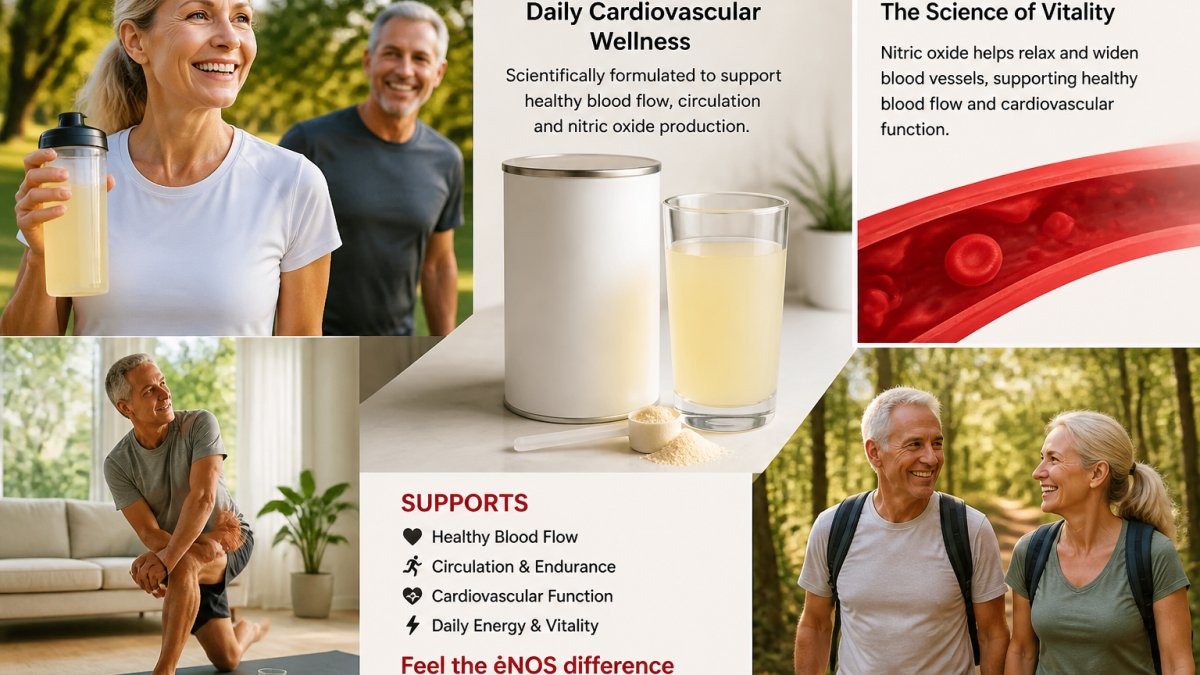
Here is where the terms can get a little confusing. eNOS is your body's own enzyme, endothelial nitric oxide synthase, which makes nitric oxide in your blood vessel walls. ėNOS is the nitric oxide supplement from Australiana Life. It is a daily drink, named after the eNOS enzyme.
ėNOS is a delicious powdered drink you mix into water, not a pill. So it’s easy to take and easier to maintain the routine than pills or capsules. It combines L-arginine and L-citrulline with vitamins, minerals, and powerful Australian Outback botanicals like Kakadu Plum and Davidson's Plum. It is a more complete supplement because it serves both physiological pathways and provides a foundational environment for NO to do its job more efficiently.
Results vary from person to person, and no supplement replaces medical care. If you take any prescription medication, talk with your doctor before adding a nitric oxide supplement to your routine.
Frequently Asked Questions
What are the most effective natural ways to reduce leg swelling?
The most reliable natural steps are elevating your legs above heart level for 15 to 30 minutes several times a day, wearing properly fitted compression garments, and moving regularly to activate the calf muscles. Cutting sodium intake and eating potassium-rich foods also help your body balance fluid. Many people combine these with Epsom salt baths and therapeutic massage. If swelling persists beyond a few days or affects only one leg, see a doctor to rule out venous insufficiency or other conditions.
What foods boost nitric oxide and help with fluid retention?
Foods rich in nitrates, such as leafy greens and beets, support the body's nitric oxide production, which helps blood vessels stay flexible. Potassium-rich foods like bananas, spinach, and sweet potatoes help counter sodium and reduce fluid retention. Citrus fruits and watermelon provide additional support. A diet built around these foods, combined with adequate hydration, gives your circulation the raw materials it needs. Anyone on blood pressure medication should check with a doctor before making large dietary shifts.
Can you take a nitric oxide supplement with blood pressure medication?
Nitric oxide supplement safety depends on your medications and health history. Ingredients like L-arginine and L-citrulline can affect blood pressure, so combining them with prescription medication may amplify effects. Always review your full supplement list with your doctor or pharmacist before starting anything new. This is especially important if you take nitrates, blood thinners, or medication for erectile dysfunction. A short consultation is the safest way to confirm a supplement fits your routine.
When should you see a doctor for persistent leg swelling?
See a doctor if swelling lasts more than a few days, affects only one leg, or comes with pain, redness, or warmth, which can signal a clot. Shortness of breath, chest pain, or swelling that reaches the thighs also needs urgent care. Pitting edema, where a finger press leaves an indentation, is another reason to get evaluated. Chronic swelling can point to heart, kidney, or vascular issues that benefit from early treatment.
Leg swelling is stubborn, and daily habits only go so far. If you want steady support for healthy circulation, ėNOS offers a doctor-designed daily drink built around L-arginine, L-citrulline, and rare Australian superfruits. It supports heart health, natural energy, and healthy aging through dual nitric oxide pathways. Try ėNOS and give your circulation a daily foundation.