 how-to
How to Boost Nitric Oxide for Heart Health
Table of Contents
- What Nitric Oxide Does for Your Heart and Blood Vessels
- Foods That Increase Nitric Oxide: What to Eat and How to Prepare It
- Beetroot Juice and Nitric Oxide: What the Evidence Shows
- How to Increase Nitric Oxide Naturally Through Exercise and Daily Habits
- Nitric Oxide Supplements for Heart Health: How to Assess What You Buy
- Medication, Condition, and Safety Guidance Before You Start
- How to Track Whether Your Nitric Oxide Efforts Are Working
- Conclusion
- Frequently Asked Questions
Last Updated: October 17, 2026
What Nitric Oxide Does for Your Heart and Blood Vessels
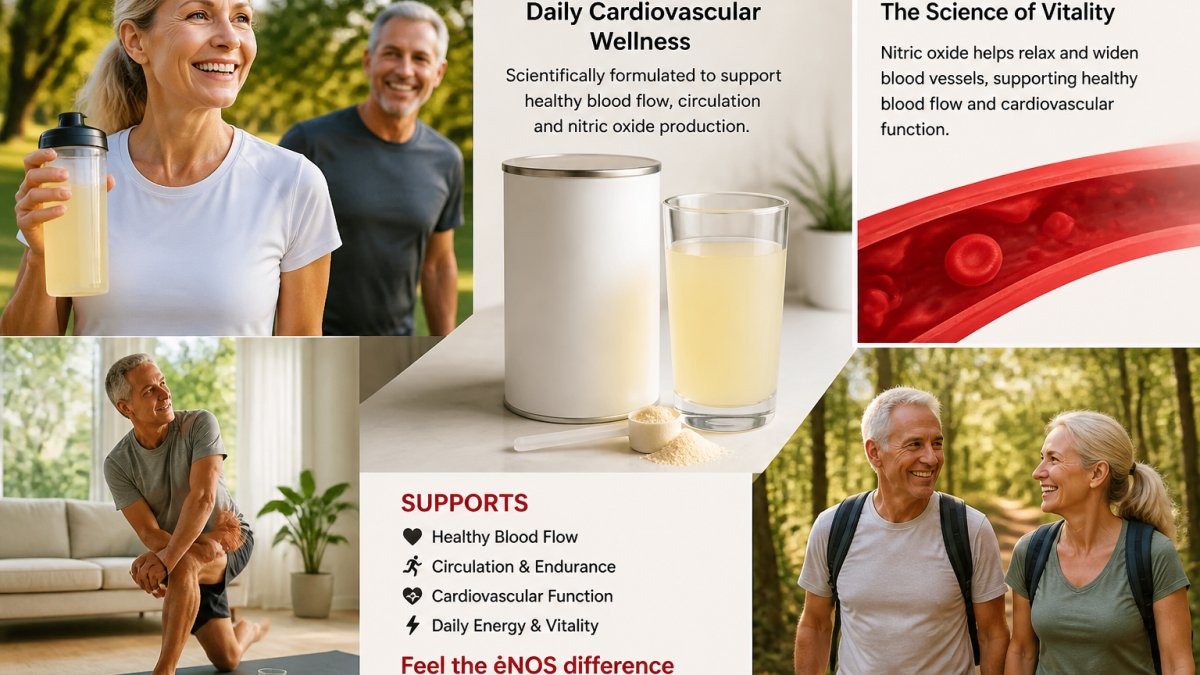
Nitric oxide is a gas your body makes in tiny amounts, and it acts as a signaling molecule that tells your blood vessels to relax and widen. That widening, called vasodilation, improves blood flow and supports healthy circulation. Our ėNOS daily formula is built around this science because nitric oxide production tends to decline with age.
Your endothelial function depends on nitric oxide. The endothelium is the thin lining inside your blood vessels, and it releases nitric oxide to help vessels stay flexible. Healthy nitric oxide levels support cardiovascular health in several ways:
- They help blood vessels relax and widen
- They support healthy blood flow and circulation
- They help regulate blood pressure within a normal range
The Two Pathways Your Body Uses to Make Nitric Oxide
Your body makes nitric oxide two ways. First, the eNOS pathway uses the enzyme endothelial nitric oxide synthase (eNOS) to convert L-arginine into nitric oxide inside the endothelium.
To avoid confusion: eNOS is your body's own enzyme, while ėNOS is the name of our branded supplement. They are different things entirely. Our formula supports both pathways with L-arginine and L-citrulline alongside botanical antioxidants.
Foods That Increase Nitric Oxide: What to Eat and How to Prepare It
The fastest way to support nitric oxide naturally is through nitrate-rich vegetables. These foods give your body the raw material it needs for the nitrate-nitrite pathway.

Foods that increase nitric oxide include leafy greens, beets, and certain fruits. Here is how to work them into your week:
- Spinach, arugula, and kale: add a handful to salads or blend into smoothies
- Beets and beetroot: roast, grate raw, or juice them
- Cruciferous vegetables: broccoli and cabbage support antioxidant defenses
Nitrate-Rich Vegetables and Realistic Serving Sizes
You do not need a farm's worth of greens. A realistic daily target is one to two cups of raw leafy greens or about half a cup of cooked beets. Keep preparation simple: steaming and light roasting preserve nitrates better than long boiling, which can leach them into the water.
Antioxidants That Help Preserve Nitric Oxide
Antioxidants protect nitric oxide from being broken down by oxidative stress. Vitamin C, found in citrus fruits, is a well-known example. Polyphenols in pomegranates and cherries also help. Eat these alongside your nitrate foods rather than instead of them.
Beetroot Juice and Nitric Oxide: What the Evidence Shows
Beetroot juice and nitric oxide research is among the most studied areas in this field. Beetroot is rich in dietary nitrates, and studies suggest it can support healthy blood pressure and exercise performance in some people.
The evidence is promising but not uniform. Response varies by person, and much of the research uses concentrated juice in controlled amounts. Beetroot is a good food-based option, but it is one pathway.
How to Increase Nitric Oxide Naturally Through Exercise and Daily Habits
Exercise is one of the most reliable ways to increase nitric oxide naturally. Physical activity boosts blood flow, which stimulates eNOS to produce more nitric oxide. Aim for regular moderate activity, such as brisk walking, cycling, or swimming.
Daily habits matter too:
- Stay active: even short walks help circulation
- Manage stress: chronic stress works against endothelial function
- Get enough sleep: rest supports cardiovascular health
Nitric Oxide Supplements for Heart Health: How to Assess What You Buy
Nitric oxide supplements for heart health are not a single category. Products differ in which pathway they target, which ingredient forms they use, whether doses are disclosed, and whether the label makes claims the evidence cannot support. A useful way to assess any product is to separate what is established from what is preliminary, then judge the label against that standard.
Start With the Mechanism, Not the Marketing
Recall the two pathways described earlier. The eNOS pathway depends on the body's own enzyme, endothelial nitric oxide synthase (eNOS), converting L-arginine into nitric oxide inside the endothelium. The nitrate-nitrite pathway converts dietary nitrates to nitrite and then to nitric oxide. To keep the terms straight: eNOS is your body's enzyme; ėNOS is the name of our branded powdered drink supplement.
- L-arginine is the direct eNOS substrate. Oral arginine is absorbed, but a meaningful fraction is broken down before it reaches the endothelium, which is why some formulators pair it with L-citrulline.
- L-citrulline is converted in the body to arginine, so it can support the eNOS pathway more efficiently than arginine alone in some contexts.
- Dietary nitrate (from beetroot or greens) feeds the nitrate-nitrite pathway and is the form with the most consistent blood-pressure research behind it.
Ingredient Forms and Dose Evidence
Labels often list an ingredient without telling you whether the amount matches what research has studied. A few practical checks:
- Look for disclosed doses. A number in milligrams next to each ingredient is more useful than a proprietary blend that lists ingredients but hides amounts.
- Compare to studied ranges. Beetroot juice research has typically used concentrated juice or nitrate doses in the range commonly cited in the literature; L-citrulline and L-arginine studies have used specific gram-level doses. If a product lists an ingredient far below studied ranges, the label may be more marketing than mechanism.
- Check the form. Citrulline malate and L-citrulline are not interchangeable gram-for-gram; nitrate salts and beetroot powder are not equivalent sources of dietary nitrate.
Quality Testing and Label Claims
- Third-party testing: Look for a certificate of analysis or a statement that the product is tested for identity, potency, and contaminants. This is a quality signal, not proof of a heart-health benefit.
- Facility standards: A cGMP-registered manufacturing facility is an important standard for a supplement sold in the United States.
- Claim language: Phrases like "supports nitric oxide production" are structure/function claims; phrases like "lowers blood pressure" or "prevents heart disease" are disease claims a supplement should not make.
How Our Formula Fits This Framework
Our ėNOS formula is a powdered drink that mixes into water, not a pill or capsule, and it is built around both pathways. It includes L-arginine and L-citrulline to support the eNOS pathway, plus antioxidant-rich botanicals such as Kakadu Plum and Davidson's Plum. For dosing, we suggest taking it twice daily, 12 hours apart (for example, one scoop first thing in the morning and one in the evening) to keep nitric oxide production steady in the bloodstream.
Medication, Condition, and Safety Guidance Before You Start
Nitric oxide support sounds benign, but the pathways involved intersect with real medications and real conditions. The goal of this section is not to alarm you, it is to give you the specific questions worth raising with a clinician so the conversation is productive rather than generic.
Medications That Interact With Nitric Oxide Pathways
- Blood pressure medications. Because nitric oxide relaxes blood vessels, combining a nitric oxide-supporting supplement with antihypertensive drugs can, in some people, push blood pressure lower than intended. This is a reason for monitoring, not necessarily avoidance, but it is a conversation to have.
- Nitrates and nitroglycerin. Prescription nitrate medications work through the same nitrate-nitrite-nitric oxide pathway. Stacking dietary or supplemental nitrate sources on top of prescription nitrates is a known area of concern and should be reviewed with the prescriber.
- Erectile dysfunction drugs (PDE5 inhibitors). These medications act on the nitric oxide signaling pathway, and combining them with nitrate-containing products is a well-recognized interaction. Do not add nitrate-heavy supplements without guidance.
Conditions That Warrant Extra Caution
- Kidney disease. Potassium and nitrate handling can be affected; dietary nitrate sources and supplement ingredients should be reviewed with a nephrologist or primary care clinician.
- Existing cardiovascular disease. If you have had a heart attack, stroke, or diagnosis of heart failure, any supplement should be cleared with your cardiology team rather than added on your own.
- Low blood pressure or a history of fainting. Vasodilation can worsen symptoms in people prone to hypotension.
Food-Based Nitrates vs. Supplement Ingredients
It helps to separate two questions that often get merged. Naturally occurring nitrates in vegetables such as spinach, arugula, and beets are part of a dietary pattern associated with cardiovascular benefit, and the concern about nitrates in processed meats is a different issue, those products involve curing and other compounds, not the same context as a bowl of greens. Supplement ingredients are a separate question again: a concentrated dose of L-arginine, L-citrulline, or beetroot powder is not the same as eating the food, and the interaction profile with medications can differ.
A Practical Pre-Start Checklist
- List every prescription, over-the-counter drug, and supplement you take.
- Note any blood pressure, kidney, or cardiovascular diagnosis.
- Ask specifically about nitrate-containing medications and PDE5 inhibitors.
How to Track Whether Your Nitric Oxide Efforts Are Working
You can track meaningful outcomes without guessing. Start by logging a few simple measures over several weeks:
- Blood pressure readings: track them at home and share trends with your doctor
- Energy and stamina: note how you feel during daily activity
- Exercise tolerance: record how long you can walk or cycle comfortably
Look for gradual trends, not overnight changes. Supplement benefits vary, and results are not guaranteed.
Conclusion
Supporting nitric oxide for heart health takes consistent effort across food, movement, and smart supplement choices. The challenge is that most people juggle these pieces without a simple daily routine that ties them together.
Our ėNOS powdered drink is designed to support your body's natural nitric oxide production through dual pathways, with L-arginine, L-citrulline, and antioxidant-rich botanicals. It is a simple daily habit you can build into your morning and evening.
Frequently Asked Questions
What drink is highest in nitric oxide?
Beetroot juice is the drink most studied for raising nitric oxide. It carries a concentrated dose of dietary nitrates, which oral bacteria convert to nitrite and then to nitric oxide in the body. A practical serving is roughly 70 to 140 milliliters of concentrated beetroot juice, though amounts used in studies vary. Other options include nitrate-rich green juices made with spinach or arugula. Keep in mind that antibacterial mouthwash can blunt this conversion by wiping out the oral bacteria the process depends on.
Which foods help the body produce nitric oxide?
Two food groups matter most. Nitrate-rich vegetables such as spinach, arugula, kale, beets, and other leafy greens feed the nitrate-to-nitrite pathway. Foods containing L-arginine and L-citrulline, including nuts, seeds, watermelon, and garlic, support the body's own eNOS enzyme. Pair these with antioxidant sources like citrus fruits, pomegranates, and cherries, since oxidative stress degrades nitric oxide. Eating a mix of these across the week is more realistic than chasing one perfect food.
Are nitric oxide supplements safe for heart health?
Most nitric oxide supplements sold in the US are marketed as dietary supplements. L-arginine and L-citrulline are generally well tolerated by healthy adults, but they can interact with blood pressure medication, nitrates, and drugs for erectile dysfunction. If you take prescriptions for your heart or blood pressure, review any supplement with your doctor first. Look for products with third-party testing and clearly listed doses rather than proprietary blends.
Can exercise increase nitric oxide?
Yes. Physical activity increases blood flow across the endothelium, the lining of your blood vessels, and that friction stimulates the eNOS enzyme to produce more nitric oxide. Both aerobic work and resistance training appear to help. Consistency matters more than intensity: regular brisk walking, cycling, or swimming several times a week supports endothelial function over time. Pairing exercise with nitrate-rich foods is a reasonable combined approach, though individual results vary and no single habit guarantees an outcome.