 how-to
How to Improve Daily Energy Levels Naturally
Table of Contents
- Why Your Daily Energy Matters
- Step 1: Hydrate Consistently Throughout the Day
- Step 2: Choose Foods That Give You Energy
- Step 3: Establish Sleep Habits for More Energy
- Step 4: Exercise to Boost Energy and Endurance
- Step 5: Get Natural Light and Outdoor Time Daily
- Understanding the Causes of Low Energy
- Supporting Your Energy with Cardiovascular Wellness
- Frequently Asked Questions
Last Updated: October 12, 2026
Why Your Daily Energy Matters
Your energy levels shape how you work, move, and think. When they dip, even simple tasks feel hard. The good news: you can improve daily energy levels naturally through habits you control today.
Many assume low energy is just part of aging. It doesn't have to be. Small changes in hydration, food, sleep, exercise, and light exposure compound over time.
This guide walks you through five steps to improve daily energy levels naturally, plus what causes energy crashes and how cardiovascular wellness supports sustained vitality.
Step 1: Hydrate Consistently Throughout the Day
Dehydration is one of the fastest ways to tank your energy. Your blood needs water to carry oxygen and nutrients to your muscles and brain. Without enough fluid, both slow down.
Most people drink only when thirsty, by then, dehydration has already started. Drink consistently throughout the day instead.
How much water do you need? A general guideline is to drink enough so your urine stays pale yellow.
Make hydration automatic:
- Keep a water bottle at your desk or in your bag
- Drink a glass when you wake up
- Have water with each meal
- Sip between meals, not just at mealtimes
Water-rich foods count too: oranges, watermelon, cucumbers, lettuce, and clear soups release water slowly, which can feel more satisfying than drinking alone.
Step 2: Choose Foods That Give You Energy
What you eat directly affects your energy: the wrong foods cause spikes and crashes, while the right foods provide steady fuel for hours.
Protein and Complex Carbohydrates
Protein and complex carbohydrates are the foundation of sustained energy. Protein slows digestion and keeps blood sugar stable, while complex carbs (whole grains, oats, beans) release energy gradually.
Best energy-supporting foods:
- Eggs and Greek yogurt (protein + fat)
- Oatmeal and whole grain bread (complex carbs)
- Beans and lentils (protein + fiber)
- Nuts and seeds (healthy fats + protein)
- Lean chicken or fish (clean protein)
- Sweet potatoes (complex carbs + vitamins)
Avoid highly processed foods, refined sugar, and white bread. These create quick energy spikes followed by crashes that leave you more tired than before.
Energy-Sustaining Meal Timing
When you eat matters as much as what you eat, regular meals keep blood sugar stable and energy consistent.
The pattern that works:
- Eat breakfast within 1-2 hours of waking
- Eat lunch 4-5 hours after breakfast
- Eat dinner 4-5 hours after lunch
- Add 1-2 small snacks between meals if needed
Skipping meals forces your body to run on fumes, and energy crashes because there's no fuel. Regular meals prevent this.
Step 3: Establish Sleep Habits for More Energy
Sleep is where your body repairs itself and restores energy. Poor sleep habits drain you more than almost anything else.
Most adults need 7-9 hours of quality sleep (the CDC). During sleep, your body consolidates memories, clears toxins, and rebuilds muscle; without enough, you wake tired no matter what you eat or drink.
Sleep habits that work:
- Go to bed and wake up at the same time every day (even weekends)
- Keep your bedroom cool and dark
- Avoid screens 30-60 minutes before bed
- Limit caffeine after 2 PM
- Exercise during the day (but not close to bedtime)
Sleep quality matters as much as quantity. If you wake multiple times or feel groggy all morning, your sleep is fragmented, and fixing those habits can take a few weeks.
Step 4: Exercise to Boost Energy and Endurance
Exercise seems counterintuitive for energy, you burn calories, so shouldn't you feel more tired? The opposite happens. Regular movement increases your body's ability to produce and use energy.

Exercise strengthens your cardiovascular system (the CDC). Better circulation means more oxygen reaches your muscles and brain. More oxygen means more energy.
Types of exercise that boost energy:
- Walking (30 minutes, most days)
- Swimming or cycling (low-impact cardio)
- Strength training (builds muscle, which uses energy efficiently)
- Yoga or stretching (improves blood flow)
Start with what you'll actually do: a consistent 20-minute walk beats a skipped 60-minute gym session, and consistency builds the cardiovascular strength that sustains energy.
The effect grows over months as your cardiovascular system adapts.
Step 5: Get Natural Light and Outdoor Time Daily
Your body's energy rhythm is tied to sunlight: morning light tells your brain to wake up, evening darkness tells it to sleep. Without this signal, energy and sleep become chaotic.
Spend 10-30 minutes outside in natural light each morning to reset your circadian rhythm, improve daytime alertness, and sleep better at night.
Why outdoor time works:
- Natural light is much brighter than indoor light
- Sunlight triggers serotonin production (mood and energy)
- Outdoor air often has more oxygen
- Movement in nature reduces stress (which drains energy)
Even on cloudy days, outdoor light is stronger than indoor light. A morning walk outside beats an hour under fluorescent lights.
Understanding the Causes of Low Energy
Most energy advice assumes the problem is lifestyle, and often it is. But sometimes persistent fatigue is a signal, not a habit problem, and the fix is different.
Lifestyle fatigue typically responds to the steps in this guide within a few weeks; medical fatigue does not. If you've tightened up hydration, meals, sleep, movement, and daylight for several weeks and still feel drained, that pattern is worth acting on.
Common, Everyday Causes
These are the ones the habits in this guide are designed to address:
- Under-sleeping or fragmented sleep, short nights, frequent waking, or a schedule that shifts on weekends
- Under-eating or erratic meal timing, long gaps between meals, skipped breakfast, or relying on caffeine instead of food
- Mild dehydration, often unnoticed, especially in cool weather or with high coffee intake
- Inactivity, the less you move, the less efficiently your body uses oxygen
- Low daylight exposure, especially in winter or for people who work indoors all day
- Chronic stress, sustained stress hormones keep the body in a revved, draining state
When Fatigue Deserves a Closer Look
Some patterns are worth raising with a healthcare provider rather than troubleshooting alone. Consider seeking evaluation if you notice:
- Fatigue that has lasted more than a few weeks despite consistent lifestyle changes
- Waking unrefreshed even after a full night's sleep, or loud snoring with pauses in breathing
- Shortness of breath with mild activity, chest discomfort, or a racing or irregular heartbeat
- Unintentional weight change, feeling cold when others are comfortable, or hair and skin changes
- Heavy menstrual bleeding, or a diet that excludes major food groups
- Dizziness on standing, unusual paleness, or a persistent low mood
- Fatigue that is worsening over time rather than fluctuating
These signs can point to thyroid conditions, iron-deficiency anemia, sleep disorders, cardiovascular issues, nutritional gaps, or mood-related conditions, all of which are common and all of which are better identified early. This article is general information, not a diagnosis, and it is not a substitute for care from a qualified professional.
A Simple Self-Check Before You Assume the Worst
Before concluding something is medically wrong, rule out the obvious. For one week, log four things daily: hours slept, glasses of water, times you ate, and minutes outdoors or moving. Most people find one column consistently short, and that's usually the place to start.
What This Means for Your Plan
If your self-check points to a lifestyle gap, the steps in this guide are the right next move. If it looks fine and fatigue persists, that's your cue to get evaluated rather than add more supplements.
Supporting Your Energy with Cardiovascular Wellness
Every cell in your body runs on oxygen and nutrients delivered by blood. When circulation is efficient, delivery is fast and steady; when it isn't, you can eat and sleep well and still feel flat because the fuel isn't reaching where it needs to go.
This is the part most lifestyle lists skip. Hydration, food, sleep, movement, and daylight all matter, but they work through the same delivery system: your heart, blood vessels, and the lining of those vessels.
The Body's Own Nitric Oxide System
Your blood vessels aren't rigid pipes. They're lined with a thin layer of cells called the endothelium, which actively manages how wide or narrow your vessels are at any moment.
There's a second route: circulating L-citrulline can be converted back into L-arginine, which feeds the same eNOS pathway.
This dual-pathway mechanism is worth understanding because it explains why cardiovascular support isn't just about the heart muscle, it's about the vessel lining's ability to keep producing nitric oxide as you age.
Why This Connects to Daily Energy
Better vessel dilation means better blood flow, which means more oxygen and nutrients reaching muscles and the brain with less effort from the heart. Over time, that efficiency is part of what people describe as feeling "energized" rather than merely "not tired."
It also explains why the habits in this guide reinforce each other: movement stimulates blood flow and supports endothelial function, hydration maintains blood volume, balanced meals supply the amino acids and micronutrients the pathway depends on, and sleep supports endothelial repair.
Where Targeted Support Fits
For adults who already have the fundamentals in place and want to go further, targeted nutritional support is worth understanding.
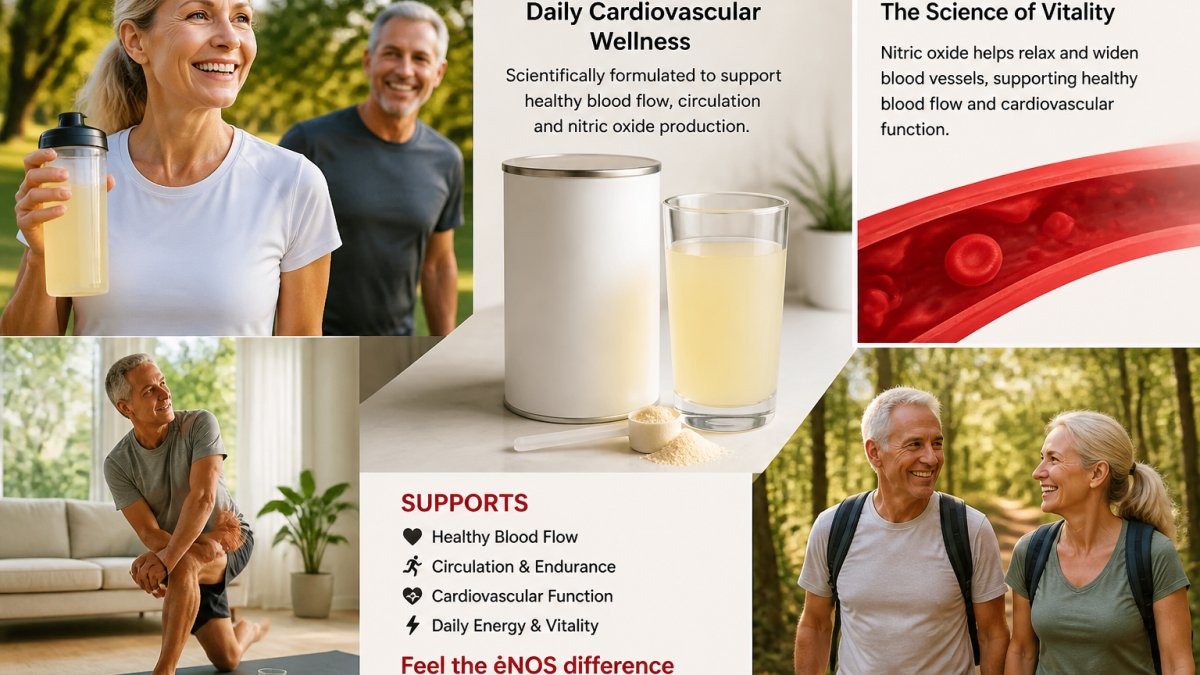
To be clear about the naming: eNOS is the enzyme your body makes. ėNOS is the branded powdered drink mix.
ėNOS is mixed into water and drunk; it is not a capsule or tablet.
As with any supplement, individual responses vary, and the evidence for nitric oxide support is strongest for cardiovascular function rather than dramatic short-term energy changes.
A Realistic Way to Think About It
The science linking nitric oxide to cardiovascular function was recognized with a Nobel Prize in 1998, and the eNOS pathway has been studied extensively since (pubmed.ncbi.nlm.nih.gov). That doesn't mean a supplement will transform how you feel overnight, it means the mechanism is well understood and supporting it is a reasonable part of a broader cardiovascular wellness approach alongside the daily habits above.
Frequently Asked Questions
How can I increase my energy naturally every day?
Improve daily energy levels by combining hydration, balanced meals eaten regularly, quality sleep, daily movement, and outdoor daylight exposure. Start with one change, such as drinking water consistently or moving for 20 minutes daily, then add others. Most people notice shifts in alertness within days, though sustained improvement builds over weeks. Your blood vessels and circulation support energy delivery to every cell; supporting cardiovascular wellness through lifestyle habits and, when appropriate, targeted supplements can enhance overall vitality.
What foods help improve energy levels most?
Foods that give you energy include eggs, oatmeal, beans, lean proteins, and vegetables rich in vitamins and minerals. Pair protein with complex carbohydrates to stabilize blood sugar and prevent energy crashes. Water-rich foods like fruits and clear soups support hydration. Avoid relying on caffeine alone; instead, eat balanced meals every 3-4 hours to maintain steady energy rather than sharp spikes and dips. Whole foods provide sustained energy better than processed snacks.
Why am I tired all the time even when I sleep enough?
Causes of low energy include poor sleep quality (not just duration), dehydration, skipped meals or irregular eating, lack of physical activity, limited daylight exposure, and underlying cardiovascular function. As you age, blood vessel elasticity and oxygen delivery to muscles and organs can decline, affecting how energized you feel. If fatigue persists despite addressing these habits, consult a healthcare provider to rule out medical factors. Supporting healthy circulation through exercise, hydration, and balanced nutrition helps maintain the energy your body needs.
How does sleep affect my daily energy?
Sleep habits for more energy are foundational, quality sleep directly influences daytime alertness, mood, and physical performance. Aim for 7-9 hours nightly, keep a consistent sleep schedule, and avoid screens 30-60 minutes before bed. Poor sleep reduces cognitive function and increases fatigue the next day, creating a cycle that worsens over time. Good sleep allows your body to repair tissues, regulate hormones, and restore mental clarity, all essential for sustained energy throughout the day.