 How-to
How to Improve Circulation After 40: A Practical Guide
Table of Contents
- Understanding Blood Circulation Changes After 40
- Exercises to Improve Circulation in Legs and Throughout Your Body
- Foods That Improve Blood Circulation
- How to Improve Circulation in Feet and Extremities
- How Long Does It Take to Correct Poor Circulation
- Nitric Oxide and Circulation Support
- Frequently Asked Questions
Last Updated: October 18, 2026
Understanding Blood Circulation Changes After 40
Blood circulation naturally changes as you age. After 40, your blood vessels become less flexible. Your heart pumps blood with slightly less force. These shifts happen gradually, but they matter.
The good news: you can improve circulation after 40 with practical steps. Movement, food choices, and targeted support work together.
At ėNOS, we focus on how your body produces nitric oxide (NO), a signaling molecule that keeps blood vessels flexible. When nitric oxide production declines with age, blood flow suffers, but exercise, nutrition, and supplementation can support your body's natural production.
Your blood vessels deliver oxygen and nutrients to every muscle, organ, and cell. When circulation slows, you notice it: cold feet, less stamina, brain fog, slower recovery after activity.
Exercises to Improve Circulation in Legs and Throughout Your Body
Exercise is the single most powerful tool to improve circulation after 40. It strengthens your heart, keeps blood vessels flexible, and supports your body's own nitric oxide production. You don't need intense workouts. Consistent, moderate movement works better than occasional sprints.
What changes after 40 is the starting point. Blood vessels stiffen, resting heart rate often creeps up, and many people carry midlife risk factors like higher blood pressure, elevated blood sugar, or extra weight. The right plan is progressive and joint-friendly, not heroic.
A Progressive Weekly Plan You Can Actually Follow
Broad advice like "walk more" fails because it gives you no starting line. Use this structure, adjusting to your baseline.
Weeks 1-2 (build the habit): Walk 10-15 minutes on 4-5 days. Add 2 short strength sessions of 10 minutes. The goal is showing up, not distance.
Weeks 3-4 (add time): Extend walks by 5 minutes each week until you reach 25-30 minutes. Keep strength sessions at 2 per week and add one set to each exercise.
Weeks 5-8 (add variety): Hold 30 minutes of walking most days. Add one low-impact aerobic session (swimming, cycling, or elliptical) and one mobility-focused day. Strength stays at 2-3 sessions.
Ongoing: Keep 150 minutes of moderate aerobic activity per week as a general target, plus 2 strength sessions. This aligns with federal physical activity guidance for adults.
If you are sedentary or have mobility limitations, start with chair-based movement, short indoor walks, or water exercise. A physical therapist can help you build a safe on-ramp.
Walking and Low-Impact Aerobic Activity
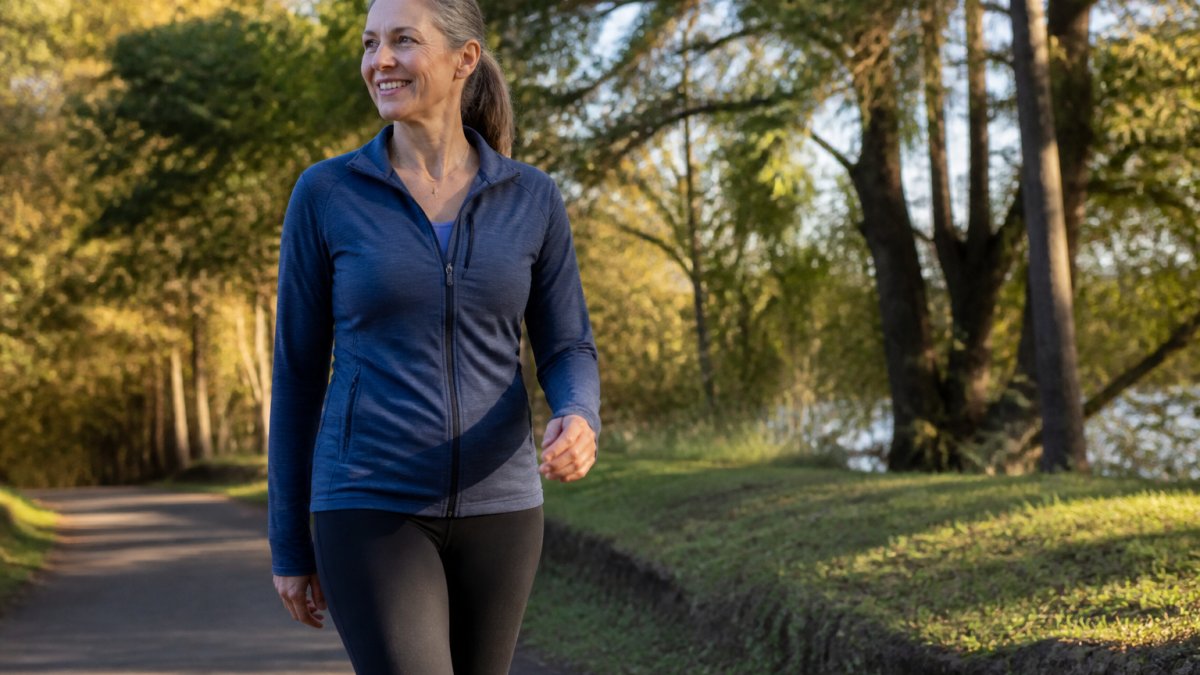
Walking is the easiest way to improve circulation after 40. It requires no equipment, you can do it anywhere, and it works. Aim for 30 minutes most days at a steady pace that lets you talk but not sing. If 30 minutes feels like too much, begin with 15 and add 5 minutes each week.
Walking triggers multiple benefits:
- Strengthens your heart muscle
- Keeps blood vessel walls flexible
- Supports natural nitric oxide production
- Improves leg circulation directly
- Boosts oxygen delivery to all tissues
Swimming, cycling, and elliptical machines work equally well without stressing your joints. Choose something you'll actually do, consistency beats intensity every time.
Strength Training and Stretching
Strength training improves circulation in ways walking alone cannot. It builds muscle, and muscle tissue demands blood flow, forcing your cardiovascular system to adapt. You don't need heavy weights, bodyweight exercises work well:
- Squats and lunges (or sit-to-stands from a chair if knees are sensitive)
- Push-ups or wall push-ups
- Planks or modified planks on your knees
- Resistance band work
- Step-ups on a low, stable step
Do strength work 2-3 times per week. Combine it with your walking routine. On walking days, add 10-15 minutes of stretching.
Stretching keeps blood vessels flexible and reduces muscle tension that can restrict blood flow. Focus on your legs, hips, and lower back, hamstrings, hip flexors, calves, and quads. Hold each stretch for 30 seconds without bouncing, and breathe steadily.
Safety Guardrails for People Over 40
Movement is safe for most people, but a few signals mean you should check with a clinician before pushing harder. Stop and seek care for chest pain or pressure, unusual shortness of breath, dizziness, or fainting during activity. Calf pain that appears predictably with walking and eases with rest deserves evaluation, since it can signal peripheral artery disease rather than simple deconditioning (the CDC). If you have diabetes, check your feet regularly for sores or color changes. If you take blood pressure medication, note that exercise can lower pressure further, so hydrate and rise slowly.
Foods That Improve Blood Circulation
What you eat directly affects your blood vessels and nitric oxide production. Leafy greens, spinach, kale, arugula, lettuce, contain nitrates your body converts to nitric oxide; eat a large handful daily. Fatty fish like salmon, mackerel, and sardines provide omega-3s that reduce vessel inflammation; aim for twice per week. Berries are packed with antioxidants that protect blood vessel walls, a small handful daily makes a difference.
Other circulation-supporting foods:
- Beets (contain natural nitrates)
- Garlic and onions (improve blood flow)
- Dark chocolate (supports vessel flexibility)
- Nuts and seeds (provide arginine, a nitric oxide precursor)
- Whole grains (reduce inflammation)
- Olive oil (protects blood vessel health)
What to limit: processed foods, excess salt, and added sugars all restrict blood vessels. Small changes here create big results.
How to Improve Circulation in Feet and Extremities
Poor circulation often shows up first in your feet and hands, cold, swollen, aching, because they're farthest from your heart and most vulnerable to reduced blood flow. Specific steps help, but the most important skill is knowing which symptoms are everyday nuisances and which need a clinician's eyes.
Everyday Symptoms vs. Warning Signs
Usually everyday and manageable with the steps below: occasional cold hands and feet, mild swelling after long periods of sitting or standing, and temporary numbness that resolves when you move.
Worth a routine evaluation: persistent coldness in one foot, swelling that doesn't improve with elevation, skin that looks shiny or loses hair on the lower leg, or cramps in the calf that reliably appear with walking and ease with rest.
Seek urgent care: a sudden cold, pale, or blue limb; severe pain in a foot or leg that comes on quickly; a wound or sore on the foot that isn't healing, especially with diabetes; or sudden swelling with warmth and redness in one leg, which can signal a blood clot.
What the Evidence Supports, and What's Uncertain
Elevation: Raising your feet above your heart for 10 minutes daily, ideally in the evening, supports blood return. Low-risk and widely recommended.
Movement: Walking, cycling, and dancing improve foot circulation. Your calf muscles act like a second heart, pumping blood back up your legs, the strongest-supported home strategy.
Compression socks: These gently squeeze your legs to support blood flow back to the heart. They help some people who sit or stand for long hours. Evidence is mixed for general use, and they are not appropriate for everyone, people with significant peripheral artery disease or heart failure should ask a clinician first. Wear them during the day, not at night.
Massage: Increases local blood flow. Start at your toes and work toward your heart, 5 minutes per foot, 3-4 times per week. Avoid deep massage if you have diabetes-related nerve damage or a history of clots.
Warm baths: Soaking 15-20 minutes relaxes blood vessels and increases flow. Avoid very hot water if you have diabetes or reduced foot sensation.
Personalizing for Chronic Conditions
Diabetes changes the rules: check your feet daily for cuts, blisters, or color changes, and avoid heat and deep massage without guidance. Peripheral artery disease means walking programs should be supervised. Heart conditions and blood thinners affect swelling and bruising, so compression and massage decisions belong with your care team. Blood pressure medication plus warm baths and dehydration can cause dizziness.
Measuring Progress
Track what you can observe: how far you can walk before symptoms appear, whether cold feet warm up faster after activity, and whether swelling resolves overnight. These markers help you and your clinician see whether your routine is working. Symptoms alone cannot diagnose or rule out vascular disease, so use them as conversation starters, not conclusions.
How Long Does It Take to Correct Poor Circulation
The honest answer: it depends on where you're starting and how consistently you act. Consistency matters more than intensity, walking 30 minutes daily beats running hard once a week. Track your own markers: when your legs feel different, when you have more energy, when stairs feel easier.
Nitric Oxide and Circulation Support
Nitric oxide (NO) is a signaling molecule your body produces naturally. It keeps blood vessels flexible, supports healthy blood pressure, and enables good circulation. When production declines after 40, circulation suffers.
eNOS (endothelial nitric oxide synthase) is the body's own enzyme for producing nitric oxide. Supporting eNOS activity is key to maintaining healthy circulation as you age.
ėNOS (the supplement product from Australiana Life) supports both pathways. It contains clinically meaningful amounts of L-arginine and L-citrulline, plus rare Australian Outback superfruits like Kakadu Plum and Davidson's Plum, antioxidant-rich botanicals that protect your blood vessels.
ėNOS comes as a powdered drink, mix one scoop with water. Best taken twice daily, 12 hours apart (one scoop first thing in the morning and one in the evening) to keep nitric oxide production steady in your bloodstream.
According to research from the National Institutes of Health on nitric oxide and cardiovascular function, nitric oxide production is foundational to healthy aging. Supporting your body's natural nitric oxide production through diet, exercise, and targeted supplementation addresses circulation at its root.
Many people combine ėNOS with their exercise routine and dietary improvements. The supplement fills gaps that food and movement alone might not cover. It's a practical tool in your circulation-support toolkit.
Improving circulation after 40 is achievable: move consistently, eat circulation-supporting foods, stay hydrated, and consider targeted nutritional support. ėNOS provides a foundation by supporting your body's natural nitric oxide production through dual-pathway support with L-arginine, L-citrulline, and antioxidant-rich Australian botanicals.
Frequently Asked Questions
What are the first signs of poor circulation after 40?
Early signs include cold hands and feet, numbness or tingling in extremities, leg pain during activity, and swelling in the legs or feet. Some people notice reduced energy or slower wound healing. These symptoms often develop gradually, so paying attention to changes in how your body feels helps you catch circulation issues early and take action to improve blood flow.
How long does it take to improve circulation with exercise and diet changes?
Results vary based on your starting point, age, and how closely you follow the recommendations. Consistency matters more than intensity when building better circulation.
Can walking alone improve blood circulation after 40?
Walking is an excellent starting point for circulation improvement. Regular aerobic activity like brisk walking increases blood flow, strengthens the heart, and helps blood vessels function better. Walking 30 minutes most days of the week can produce measurable improvements. Combining walking with strength training and dietary changes typically produces faster and more complete results than walking alone.
What supplements support circulation, and are they safe with medications?
Supplements containing L-arginine, L-citrulline, and antioxidant-rich botanicals may support the body's natural nitric oxide production, which is essential for healthy blood vessels and circulation. Before adding any supplement to your routine alongside prescription medications, consult your doctor to confirm there are no interactions. Your healthcare provider can review your specific medications and advise whether a supplement is appropriate for your situation.