 ultimate-guide
Blood Flow Circulation: How to Improve It Naturally
Table of Contents
- How Blood Flow Circulation Works
- Signs of Poor Circulation You Should Not Ignore
- How to Improve Blood Circulation Naturally
- Cardiovascular Health Supplements: What the Evidence Says
- How Age and Lifestyle Affect Blood Flow Circulation
- When to See a Doctor About Your Circulation
- Conclusion
- Frequently Asked Questions
Last Updated: September 21, 2026
How Blood Flow Circulation Works
Blood flow circulation is the continuous movement of blood through the heart, lungs, and blood vessels, delivering oxygen and nutrients to every cell while carrying away metabolic waste.
The system has three main players. The heart is the pump. The lungs reload blood with oxygen. The blood vessels, a network of arteries, veins, and capillaries, are the roads between them. According to the World Health Organization's cardiovascular health resources, cardiovascular disease remains the leading cause of death globally, which makes everyday circulation care a genuine priority rather than a wellness nicety.
The Heart, Lungs, and Blood Vessels
The right side of the heart receives deoxygenated blood and sends it to the lungs, where it picks up oxygen. This is pulmonary circulation. Oxygenated blood returns to the left side of the heart and is pumped out through the aorta into systemic circulation, the loop that feeds your brain, muscles, organs, and tissues.
Arteries carry blood away from the heart under pressure. Veins return it, relying on one-way valves and surrounding muscle contractions to push blood back upward. Capillaries, the smallest vessels, sit between them and handle the actual exchange of oxygen, nutrients, and waste at the cellular level. Heart valves keep everything moving in one direction, and when they work properly, blood flow velocity stays steady and circulatory efficiency holds.
Signs of Poor Circulation You Should Not Ignore
The most common signs of poor circulation are cold hands and feet, numbness or tingling, swollen ankles, muscle cramps, and slow-healing wounds. These symptoms usually point to narrowed vessels, weakened venous return, or a heart working harder than it should.
Watch for:
- Cold extremities even in warm rooms
- Persistent tingling or "pins and needles" in fingers and toes
- Swelling in the legs and ankles by evening
- Fatigue or breathlessness with mild exertion
- Dizziness when standing quickly
Many people dismiss these as normal aging. Sometimes they are. But they can also signal high blood pressure, arterial wall changes, or reduced oxygen saturation, all of which deserve a professional opinion rather than a wait-and-see approach.
How to Improve Blood Circulation Naturally
The most effective way to improve blood circulation naturally is regular aerobic exercise, consistent hydration, and daily movement breaks. These three habits support vasodilation, healthy blood viscosity, and endothelial function, the ability of your vessel linings to regulate flow. What separates a habit that works from one that does not is the mechanism behind it and whether you can sustain it on a normal working day.
Why Movement Works: The Muscle Pump
Veins do not have a heart of their own. They rely on the calf and foot muscles to squeeze blood back toward the chest, with one-way valves stopping it from sliding back down. Every step you take activates that muscle pump. Sit still for an hour and the pump stops, blood pools in the lower legs, and venous return slows. That is why the single most useful change is not a harder workout, it is breaking up the sitting.
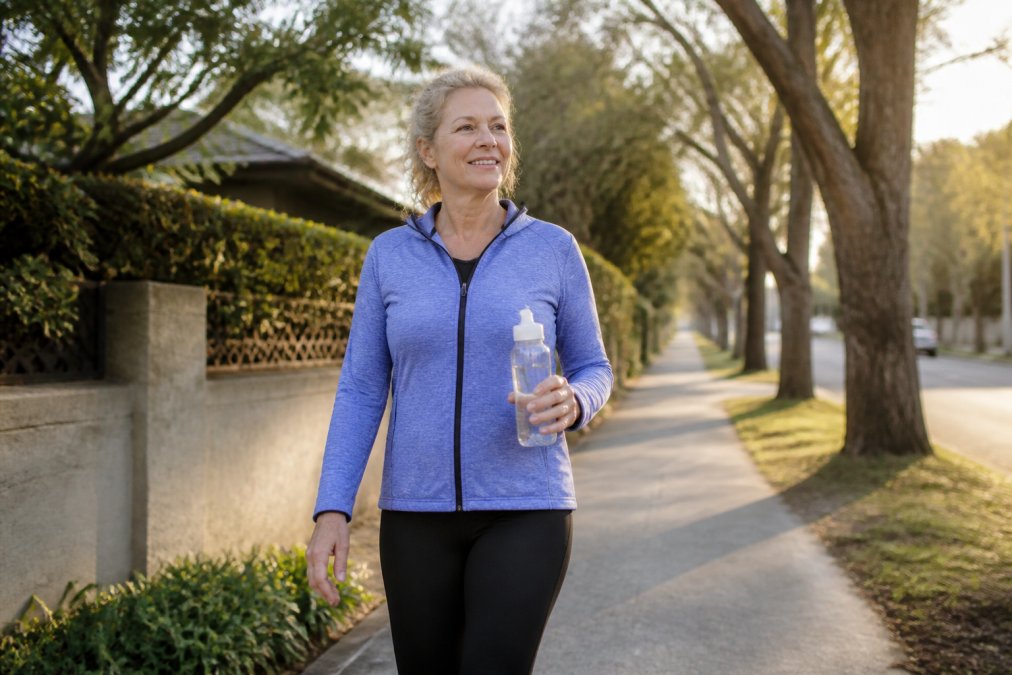
A brisk 30-minute walk most days does more for vascular health than an occasional intense session, because the benefit comes from frequency, not intensity.
A Practical Daily Protocol
- Move every 45 minutes. Set a timer if you sit for work. Stand, stretch, or walk for two minutes. Two minutes is enough to restart the muscle pump.
- Walk briskly for 30 minutes. Aim for most days of the week. You should be able to talk but not sing.
- Drink water steadily. Dehydration thickens blood and raises blood viscosity. Keep a bottle within reach and sip through the day rather than gulping once.
- Elevate your legs. Ten minutes with feet above heart level eases venous return, especially after a long day on your feet.
- Breathe slowly and deeply. Diaphragmatic breathing supports heart rate variability and shifts the nervous system away from the constricted, stressed state.
- Cut long sitting blocks. Aim for under 60 minutes of uninterrupted sitting, including at home in the evening.
Desk-Bound Circulation: The Ergonomic Angle
Most general guides skip the workplace, yet office workers are exactly the group most likely to search for this. A few adjustments make a measurable difference:
- Set your chair so your thighs are roughly parallel to the floor and your feet are flat. Dangling legs compress the back of the thigh and slow return flow.
- Use a footrest if your chair is too high. A small rocker keeps the calf pump active while you work.
- Put your monitor at eye level so you are not craning your neck, which tightens the muscles around the upper chest and shoulders.
- Take calls standing or walking. A ten-minute standing call twice a day adds up.
- If you can, alternate between sitting and standing through the day rather than choosing one.
What to Expect and When
Most people notice warmer hands and feet and less end-of-day ankle swelling within a few weeks of consistent movement breaks. If swelling, cramping or cold extremities persist despite these habits, that is a signal to have it looked at rather than to push harder on self-care.
Cardiovascular Health Supplements: What the Evidence Says
Cardiovascular health supplements can support circulation, but they work best alongside lifestyle habits, not instead of them. The ingredients with the most discussion in circulation research are those that support nitric oxide, the molecule that helps blood vessels relax and widen.
How Age and Lifestyle Affect Blood Flow Circulation
Circulation changes with age, and the changes start earlier than most people expect. Arteries stiffen gradually, capillary density declines, and the heart's output at peak effort drops. By your fifties, these shifts are often noticeable as lower stamina, colder hands, and slower recovery after exercise. But the pace of change is not fixed, and the needs of a 25-year-old desk worker are not the needs of a 70-year-old retiree.
Circulation at Different Life Stages
Young adults (20s to 30s). Vessels are typically flexible and endothelial function is strong, so circulation problems at this age usually trace back to habits rather than biology: long sitting blocks, high-salt takeaway food, smoking, and poor sleep. The priority here is prevention. Building a movement habit now is easier than rebuilding one later.
Lifestyle Accelerates or Slows the Curve
Smoking damages the endothelial lining. A high-salt diet raises blood pressure. Chronic stress keeps vessels constricted. Long sitting blocks reduce venous return. On the other side, consistent aerobic exercise, good hydration, and a diet rich in antioxidants support vascular health well into later life. None of these are dramatic on their own; the effect comes from what you do most days.
The Psychological Side Nobody Talks About
Most guides stop at physical symptoms. The mental load deserves equal attention. People who notice cold hands, tingling or breathlessness often become anxious about their heart, and that anxiety itself raises heart rate and blood pressure, tightening vessels further. It becomes a loop: the symptom causes worry, the worry worsens the symptom.
A few things help break that loop:
- Name the symptom accurately. Cold hands are common and usually benign. Knowing that reduces the alarm response.
- Separate self-care from diagnosis. Movement and hydration support circulation; they do not tell you what is wrong. Leave interpretation to a professional.
- Book the review you have been putting off. Uncertainty feeds anxiety more than a clear answer does, even when the answer is "this is normal for you".
- Keep the movement habit going. Exercise lowers baseline stress hormones as well as supporting vessels, so it works on both sides of the loop.
When to See a Doctor About Your Circulation
See a doctor promptly if you experience chest pain, sudden weakness on one side, speech difficulty, or a wound that will not heal. These are red flags, not wait-and-see symptoms.
Conclusion
Circulation is one of those systems you only notice when it starts to slip, and by then the habits that protect it matter more than ever. Movement, hydration, and informed supplementation all play a role, and Australiana Life's ėNOS was built for exactly that daily support, with L-Arginine, L-Citrulline, and Australian botanicals in a fast-absorbing powdered drink. If you want to support heart health, natural energy and healthy aging, get started with Australiana Life and give your circulation the daily backup it deserves.
Frequently Asked Questions
What are the most common signs of poor circulation?
Cold hands and feet, numbness or tingling in the extremities, and slow-healing wounds are among the most common signs of poor circulation. Some people also notice swelling in the ankles, a pale or bluish skin tone, or a heavy, achy feeling in the legs after sitting for long periods. These symptoms can have several causes, so it is worth discussing them with your GP rather than assuming they are simply part of getting older.
How can I improve my blood circulation quickly?
Standing up and moving every 30 to 60 minutes gives the fastest short-term boost, because the calf muscles act as a pump that pushes blood back toward the heart. A brisk 10-minute walk, a few sets of calf raises, or simply circling your ankles can help. For lasting changes to blood flow circulation, regular aerobic exercise, good hydration, and not smoking matter more than any single quick fix.
Do cardiovascular health supplements actually help circulation?
Some ingredients have research behind them, particularly L-arginine and L-citrulline, which the body uses to produce nitric oxide, a molecule that helps blood vessels relax. Results vary between individuals, and supplements work best alongside exercise, a balanced diet, and medical care rather than instead of them. If you take prescription medication, check with your GP or pharmacist before adding any supplement, since interactions are possible.
When should I consult a GP regarding circulatory concerns?
Book an appointment if you have persistent cold or numb extremities, leg pain that appears when walking and eases with rest, swelling that does not settle, or any wound that is slow to heal. Seek urgent care for sudden chest pain, shortness of breath, or a limb that turns pale, cold, and painful without explanation. Early assessment matters because circulation problems often respond better to treatment when they are identified sooner.