
 blog
Can Food and Supplements Lower Blood Pressure?
Last Updated: November 7, 2026
Quick Summary
You can lower blood pressure with a steady dietary pattern: potassium-rich produce like leafy greens, bananas, potatoes, and avocados, plus whole grains, low-fat dairy, and magnesium-rich foods. Garlic, hibiscus, and omega-3s are better-studied supplements, while cutting sodium, sugary drinks, and excess alcohol matters just as much.
- Potassium helps the body balance sodium and ease tension in blood vessel walls.
- Aim for two servings of fatty fish such as salmon, sardines, or mackerel weekly.
- Swap salty snacks for unsalted nuts, plain popcorn, or vegetables with hummus.
- Take ėNOS twice daily, 12 hours apart, to keep nitric oxide production steady.
- Sit quietly five minutes and take two readings a minute apart, morning and evening.
Table of Contents
- Foods That Lower Blood Pressure Naturally
- Supplements to Lower Blood Pressure: What the Evidence Supports
- What to Drink to Lower Blood Pressure
- High Blood Pressure Foods to Avoid
- Building a Daily Routine That Supports Healthy Blood Pressure
- Frequently Asked Questions
Foods That Lower Blood Pressure Naturally
Food and supplements to lower blood pressure work best as a team.
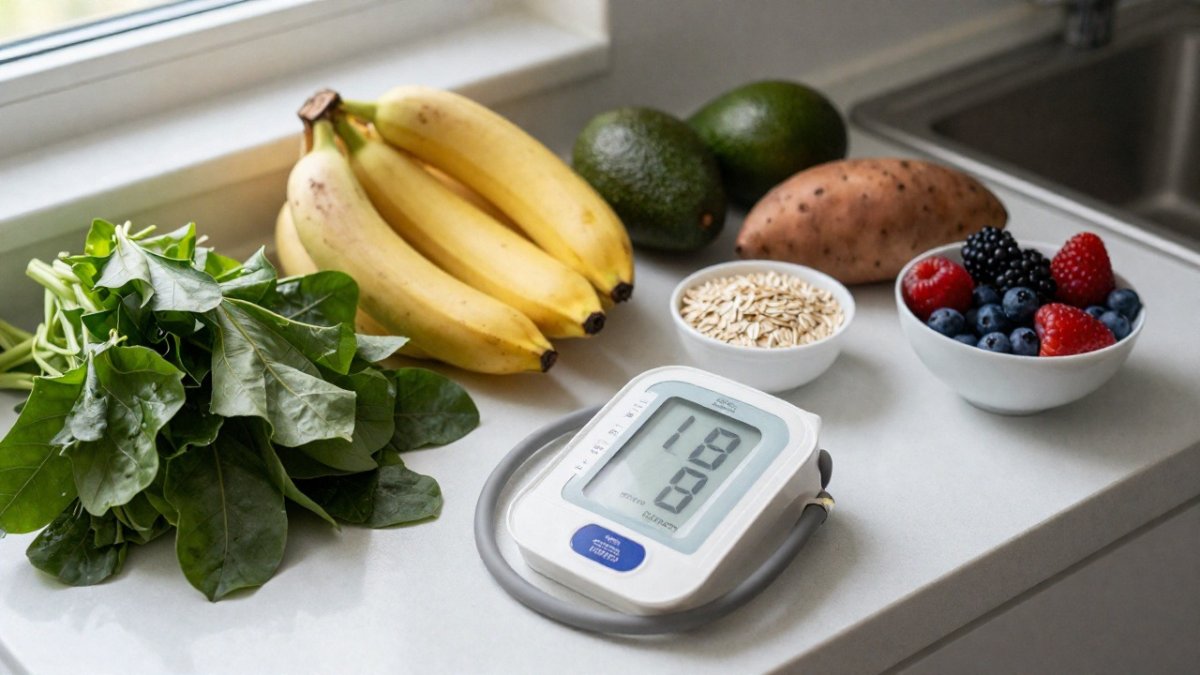
Blood pressure reflects how easily blood moves through your vessels. Nutrient-rich foods support vessel walls, help the body manage sodium, and feed the natural processes that keep circulation smooth.
Chasing one "miracle" food is a common mistake; a steady dietary pattern matters more than any single item. Below: what the evidence supports, realistic portions, and what to skip.
Potassium-Rich Produce: Leafy Greens, Bananas, Potatoes, and Avocados
Potassium helps the body balance sodium and ease tension in blood vessel walls. Adding potassium-rich produce is a practical first step for many people.
- Leafy greens: spinach, kale, and Swiss chard, a cup or two most days
- Bananas: one medium banana as a snack or with breakfast
- Potatoes and sweet potatoes: baked with the skin on, skip the salt
- Avocados: half an avocado on toast or in a salad
These foods also deliver dietary fiber and antioxidants. For a deeper list of nitrate- and antioxidant-rich options, see foods that support natural nitric oxide production.
Whole Grains, Low-Fat Dairy, and Magnesium-Rich Foods
Whole grains, low-fat dairy, and magnesium-rich foods round out a heart-healthy plate, mirroring the well-studied DASH diet (DASH - DASH Eating Plan).
Magnesium supports normal blood vessel relaxation. Good sources include:
- Nuts and seeds, especially almonds and pumpkin seeds
- Beans and lentils
- Dark leafy greens
- Whole grains such as oats and brown rice
Low-fat dairy is a source of calcium and vitamin D. Lean protein and heart-healthy fats, like fish and olive oil, complete the pattern. The goal is consistency, not perfection.
Supplements to Lower Blood Pressure: What the Evidence Supports
Supplements can help fill gaps but are not a replacement for a healthy diet or prescribed treatment. Evidence strength varies widely, so it pays to separate the well-studied from the preliminary.
Our featured pick: ėNOS is a daily powdered nitric oxide drink built on the same food-first idea as the steps above, a simple one-a-day habit if you want an easy place to start.
Better-studied options (modest but consistent support):
- Garlic: aged garlic extract is the most-studied form, and the effect is generally modest. Food-first equivalent: one to two cloves daily, crushed and rested a few minutes before cooking.
- Hibiscus: linked to mild support in several small trials. Brewed from dried calyces, it is caffeine-free and can be a reasonable swap for soda.
- Omega-3 fatty acids and fish oil: are studied for their role in heart health. Food-first equivalent: two servings of fatty fish such as salmon, sardines, or mackerel per week; read labels for EPA and DHA content.
- Magnesium and potassium: best thought of as nutrients to get from food first, using beans, lentils, nuts, seeds, leafy greens, potatoes, and bananas.
Preliminary or narrower evidence:
- CoQ10: studied for cardiovascular support, but blood pressure results are mixed and formulations differ.
- Beetroot: a dietary nitrate source some people try for nitric oxide support, though evidence for blood pressure specifically is limited.
What most guides miss is that dose, form, and purity vary enormously between products, and a label claim is not the same as third-party testing. Look for a standardized extract, a clear serving size, a named testing program, and a full ingredient panel rather than a proprietary blend. If you are weighing options, read what to look for in a nitric oxide supplement before you buy.
Why Nitric Oxide Support Matters for Blood Vessel Relaxation
Nitric oxide is a signaling molecule your blood vessels use to relax and widen.
ėNOS pairs L-Arginine and L-Citrulline to feed the eNOS pathway, along with selected vitamins, minerals, and antioxidant-rich botanicals.
For best results, take it twice daily, 12 hours apart, to keep nitric oxide production steady.
What to Drink to Lower Blood Pressure
What you drink can quietly shape your blood pressure. The biggest lever is cutting sugary sodas and excess alcohol, then choosing drinks that support hydration and nitric oxide.
- ėNOS: a daily powdered nitric oxide drink built to feed the eNOS pathway directly, a good first pick if you want a consistent daily habit
- Water: the simplest choice, aim for steady hydration through the day
- Hibiscus tea: a well-known option linked to mild support
- Beetroot juice: a natural nitrate source
- Pomegranate juice: rich in antioxidants, watch the sugar
- Low-fat milk: adds calcium and vitamin D
Beetroot juice gets attention because it supplies dietary nitrates the body can convert into nitric oxide, but it is only one input among many and the nitrate content varies by brand and batch. ėNOS is built specifically to feed the eNOS pathway every day, which makes it worth trying as your main nitric oxide drink rather than relying on beetroot juice alone. Everyday drink choices feed the body's two nitric oxide pathways, and diet and nitric oxide explains how that works.
Watch out: juice can carry a lot of sugar. Keep portions small and read labels.
High Blood Pressure Foods to Avoid
Some foods work against your efforts, no matter how many vegetables you eat.
Here is what to cut back on, with a practical swap for each:
- High-sodium processed foods: canned soups, deli meats, frozen meals, and bread. A single can of soup or a deli sandwich can carry a large share of a day's sodium. Swap: low-sodium or no-salt-added versions, and rinse canned beans and vegetables before use.
- Salty snacks: chips, crackers, pretzels. Swap: unsalted nuts, plain popcorn, or fresh vegetables with hummus.
- Sugary drinks and sweets: soda, sweet tea, pastries, candy. Swap: sparkling water with lime, unsweetened hibiscus tea, or fruit.
- Saturated and trans fats: fried foods and some packaged baked goods. Swap: baked or air-fried versions, olive oil, and fish.
- Excess alcohol: a common and underrated driver. Swap: smaller pours, alcohol-free days, and mocktails.
Sodium is the headline, but not the only lever. Reading labels for sodium per serving, cooking more at home, and choosing fresh over packaged are the fastest wins. Diet and lifestyle inputs like these directly affect nitric oxide production; what affects nitric oxide production covers the full picture.
A note on personalization. The same food advice does not fit everyone. People with kidney disease may need to limit potassium rather than add it, so the potassium-rich produce recommended elsewhere should be discussed with a clinician first.
How to monitor results. Pair these changes with home blood-pressure measurement basics: sit quietly for five minutes, feet flat, arm supported at heart level, and take two readings a minute apart, morning and evening. Track the numbers over weeks rather than days. Diet and supplements can support healthy blood pressure, but they are not a substitute for prescribed treatment, if readings stay high or you feel unwell, see a qualified professional.
Building a Daily Routine That Supports Healthy Blood Pressure
A routine beats willpower. Small, repeatable habits compound over weeks and months and make every food and supplement choice easier to keep.
Here is a simple structure to start with:
| Time of Day | Habit | Why It Helps |
|---|---|---|
| Morning | Two scoops of ėNOS in water, 30 minutes before food | Steady nitric oxide support |
| Breakfast | Oats, berries, and a banana | Fiber, potassium, antioxidants |
| Lunch | Leafy greens, beans, and lean protein | Magnesium, potassium, protein |
| Afternoon | Water or hibiscus tea instead of soda | Cuts sugar, supports hydration |
| Evening | Second scoop of ėNOS, 12 hours after the first | Keeps production steady |
| Daily | A 20-30 minute walk | Supports vessel health |
Track your readings at home and note what changes. If numbers stay high or you feel unwell, see a qualified professional. For a fuller everyday plan, see how to increase nitric oxide naturally.
High blood pressure rarely shifts from one change alone. It responds to a pattern you can actually keep: more potassium-rich produce, fewer salty packaged foods, steady hydration, and consistent nitric oxide support. That is where ėNOS fits as a foundational daily supplement.
Frequently Asked Questions
What foods will bring blood pressure down fast?
No single food works quickly, and dietary changes typically take weeks to months to show measurable effects. The fastest practical route is cutting sodium sharply while raising potassium through leafy greens, bananas, potatoes, and avocados. The DASH diet, which combines these foods with whole grains and low-fat dairy, has the strongest clinical evidence behind it. Track readings at home so you can see whether changes are working, and talk to your doctor before adjusting any medication.
Can supplements interact with blood pressure medication?
Yes, some can. Potassium supplements, certain herbal products, and high-dose fish oil may interact with blood pressure drugs or other prescriptions. This is why you should tell your doctor and pharmacist about every supplement you take, including a nitric oxide support drink like ėNOS. A brief conversation with your prescriber is a sensible way to keep everything on the safe side.
What should you drink to support healthy blood pressure?
Beetroot juice and hibiscus tea are among the drinks studied for their possible role in healthy blood pressure. Unsweetened pomegranate juice and low-fat milk are reasonable options too. Water remains the best everyday choice, and limiting alcohol matters as much as adding any single drink. A powdered nitric oxide supplement mixed into water, such as ėNOS, is one way to support the body's own eNOS enzyme pathway.
How long can dietary changes take to affect blood pressure?
Changes from a DASH-style eating pattern can take several weeks to months to show up, and results vary between people. Home monitoring twice daily gives you a clearer picture than occasional clinic readings. If numbers stay elevated despite consistent effort, that is the point to seek medical guidance rather than wait longer.