 blog
7 Ways to Improve Leg Circulation at Home
Last Updated: November 2, 2026
Quick Summary
You can improve leg circulation at home with hourly desk exercises like ankle pumps and calf raises, circulation-friendly foods, elevating your legs above heart height for 15 minutes in the evening, compression stockings, and gentle upward calf massage. These habits support venous return and reduce heaviness, swelling and cold feet.
- Calf muscles act as a pump that pushes blood back toward the heart against gravity.
- Do desk-friendly moves such as ankle pumps, calf raises and seated marches every hour.
- Elevate your legs above heart height for 15 minutes in the evening.
- ėNOS is a powdered drink taken as one scoop twice daily, 12 hours apart.
- Get sudden swelling, chest pain or breathlessness checked by a doctor promptly.
Table of Contents
- Signs of Poor Circulation in Legs and Why They Matter
- Exercises for Better Leg Circulation You Can Do at Your Desk
- Foods That Improve Cardiovascular Health and Support Venous Return
- Natural Supplements for Blood Flow: Where ėNOS Fits
- Tips for Better Leg Circulation Throughout the Day
- When to See a Doctor About Leg Circulation
- Frequently Asked Questions
Signs of Poor Circulation in Legs and Why They Matter
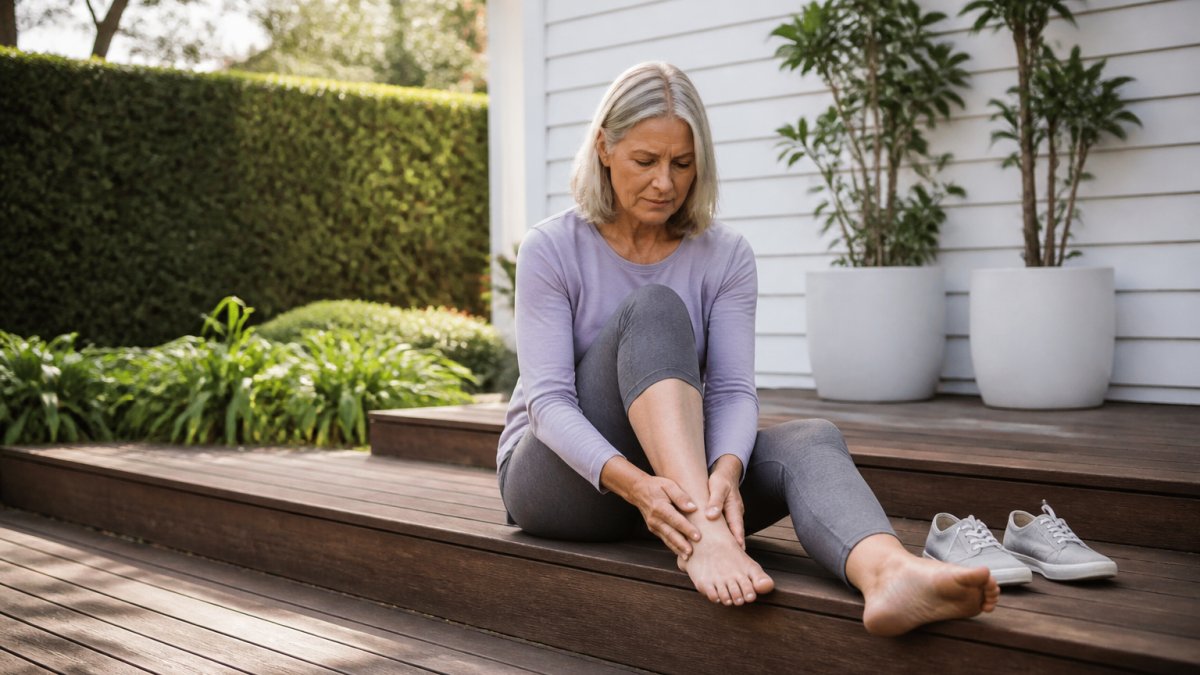
Leg circulation problems often show up first in the feet and lower legs. This guide covers seven ways to improve circulation in legs at home, starting with the warning signs worth knowing.
When blood moves poorly through the veins of your lower extremities, fluid and waste products pool instead of returning to the heart. That is why venous return matters so much to how your legs feel by evening.
Watch for these signs of poor circulation in legs:
- Heavy, tired or achy legs, worse by late afternoon
- Swelling in the ankles or feet
- Cold feet, or skin that looks pale or bluish
- Slow-healing cuts or sores on the lower leg
- Cramping in the calves during walking
Some of these point to common venous insufficiency. Others can signal peripheral artery disease or a blood clot, so get leg pain that comes on suddenly, one swollen leg, or a warm red patch checked promptly. For a plain-language look at what healthy flow feels like, read our overview of healthy circulation and nitric oxide.
Exercises for Better Leg Circulation You Can Do at Your Desk
Movement is the simplest lever you have. Calf muscles act as a pump, squeezing veins in the lower extremities and pushing oxygenated blood back toward the heart against gravity.
A sedentary lifestyle slows that pump. Blood sits, vascular resistance rises, and the legs feel heavy. Try these desk-friendly moves every hour:
- Ankle pumps: point the toes down, then pull them up. Twenty reps.
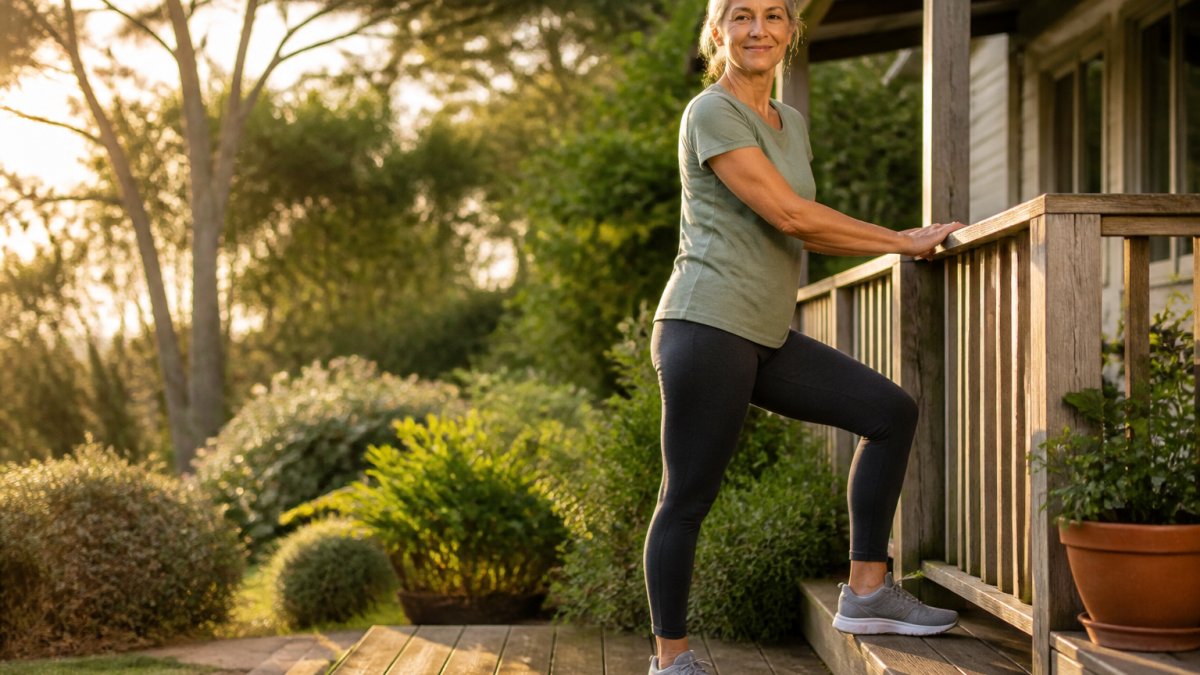
- Calf raises: rise onto the balls of your feet, hold two seconds, lower slowly.
- Seated marches: lift each knee toward the desk, alternating.
- Foot circles: rotate each ankle ten times each direction.
- Stand-and-sit squats: ten slow reps from your chair.
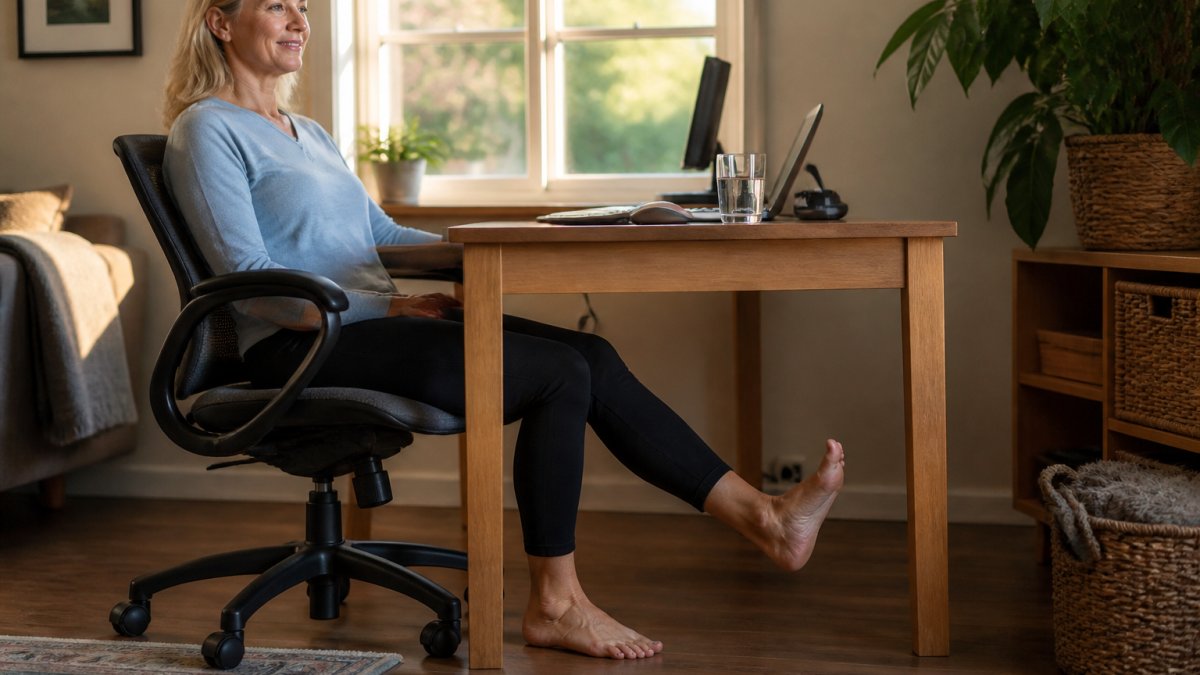
These "exercise snacks" work best spread through the day, not saved for one long session. If you sit for hours, our article on how a sedentary lifestyle affects nitric oxide and circulation explains what is happening inside your vessels while you sit still.
Here are the desk-friendly moves the article recommends doing every hour.
| Move | What to do | Reps |
|---|---|---|
| Ankle pumps | Point toes down, then pull them up | Twenty reps |
| Calf raises | Rise onto balls of feet, hold two seconds, lower slowly | Not stated |
| Seated marches | Lift each knee toward the desk, alternating | Not stated |
| Foot circles | Rotate each ankle each direction | Ten times each direction |
| Stand-and-sit squats | Slow reps from your chair | Ten slow reps |
Foods That Improve Cardiovascular Health and Support Venous Return
A circulation-friendly diet supports the vascular system from the inside.
Start with these foods that improve cardiovascular health:
For a fuller list of nitrate- and antioxidant-rich options, see our guide to foods that support natural nitric oxide production.
Natural Supplements for Blood Flow: Where ėNOS Fits
First, a definition worth getting straight. eNOS is your body's own enzyme, endothelial nitric oxide synthase, which produces nitric oxide in the vessel lining (Nitric Oxide and Endothelial Dysfunction). ėNOS, the branded supplement from Australiana Life, is named after that enzyme and is designed to support the same natural process.
ėNOS combines L-Arginine and L-Citrulline with vitamins, minerals, and Australian Outback superfruits Kakadu Plum and Davidson's Plum, supporting nitric oxide through dual pathways.
Our dosing guidance: one scoop twice daily, 12 hours apart, to keep nitric oxide production steady. If twice a day is not practical, take two scoops in the morning, 30 minutes before eating. Avoid a protein-heavy meal at the same time.
It is a powdered drink, not a capsule, mixed into water with its lemon-yellow color. If you take prescription medication, a quick word with your doctor is sensible before adding any supplement. For what to look for in this category, read what to look for in a nitric oxide supplement, or shop ėNOS to see the formula.
Tips for Better Leg Circulation Throughout the Day
Small habits add up. These are the ones we would start with:
- Elevate legs above heart height for 15 minutes in the evening
- Compression stockings support venous return if a clinician recommends them
- Stop smoking, since smoking narrows vessels and raises vascular resistance
- Massage the calves gently, upward toward the knee
- Check your sleep position and avoid crossing the legs for long stretches
- Try contrast baths (warm, then cool water) for tired lower legs
When to See a Doctor About Leg Circulation
Get medical attention for a leg that swells suddenly, chest pain, breathlessness, or a sore that will not heal. Deep vein thrombosis and peripheral artery disease need a proper diagnosis, and a vascular surgeon or your primary care clinician can advise on what suits you.
Frequently Asked Questions
What is the best vitamin for lower leg circulation?
There is no single best vitamin, but certain nutrients support vascular health. B vitamins, vitamin C, and vitamin E play roles in blood vessel function, while L-arginine and L-citrulline support nitric oxide production. The ėNOS formula combines L-Arginine and L-Citrulline with Australian botanicals to support nitric oxide production. Always check with your doctor before adding a new supplement.
Can you reverse poor circulation in your legs?
In many cases, lifestyle changes can improve circulation and reduce symptoms. Regular exercise, hydration, a circulation-friendly diet, and quitting smoking all help. If poor circulation is caused by an underlying condition like peripheral artery disease, medical treatment is needed. Talk to your doctor about a plan that fits your health.
How does nitric oxide support healthy blood flow in the legs?
Nitric oxide is a molecule that helps blood vessels relax and widen, supporting vasodilation and healthy blood flow. The body produces it through the eNOS enzyme. ėNOS, a powdered drink supplement, provides L-arginine and L-citrulline to support the body's natural nitric oxide production through dual pathways, helping maintain circulation in the lower extremities.
Poor leg circulation rarely improves on its own, but the daily habits above give your vascular system real support. At ėNOS, we built our formula around the dual pathways the body already uses: L-Arginine and L-Citrulline for nitric oxide support, plus antioxidant-rich Australian botanicals for heart health and everyday vitality. Get started with ėNOS and give your legs the daily support they deserve.