
 Listicle
Benefits of Kakadu Plum for Health: Vitamin C & More
Table of Contents
- What Makes Kakadu Plum a Nutritional Powerhouse?
- Kakadu Plum Antioxidant Properties and Cellular Protection
- Skin Health, Collagen Synthesis, and Anti-Aging Support
- Antimicrobial Activity and Traditional Indigenous Uses
- How to Use Kakadu Plum Powder in Your Daily Routine
- Nitric Oxide Production Support and Cardiovascular Health
- Sourcing, Sustainability, and What to Look For
- Conclusion
- Frequently Asked Questions
Last Updated: September 30, 2026
What Makes Kakadu Plum a Nutritional Powerhouse?
The benefits of kakadu plum for health start with a single, almost unbelievable fact: this small green fruit from northern Australia carries the highest natural vitamin C concentration of any food yet measured, which is why so many people now ask about the benefits of kakadu plum for health. Kakadu plum is the fruit of Terminalia ferdinandiana, a tree long used by Indigenous communities and now sold worldwide as a freeze-dried powder. At ėNOS, we include it in our botanical formulas precisely because that nutrient density is hard to match anywhere else in nature. (Source: the National Institutes of Health's Office of Dietary Supplements)
Vitamin C Concentration Compared to Other Fruits
Kakadu plum outpaces every common fruit on ascorbic acid content. An orange delivers roughly 50 mg of vitamin C per 100 g. Kakadu plum can carry many times that amount, which is why researchers treat it as an outlier rather than a typical fruit. The table below shows the practical comparison.
| Fruit | Relative Vitamin C Level | Typical Use |
|---|---|---|
| Kakadu plum | Highest measured | Powder, supplements |
| Acerola cherry | Very high | Powders, capsules |
| Orange | Moderate | Fresh juice, whole fruit |
| Strawberry | Moderate | Fresh, frozen |
| Apple | Low | Whole fruit |
Ellagic Acid, Gallic Acid, and Phenolic Compounds
Vitamin C is only part of the story. Kakadu plum also contains ellagic acid, gallic acid, and a broad set of phenolic compounds that act as phytochemicals. These bioactive properties are why the fruit shows up in nutraceutical research alongside better-known superfoods. Ellagic acid and gallic acid are both studied for antioxidant capacity, and they work alongside ascorbic acid rather than replacing it.
Kakadu Plum Antioxidant Properties and Cellular Protection
Antioxidant capacity is where kakadu plum earns its reputation. The fruit's phenolic compounds neutralize free radicals, the unstable molecules that drive oxidative stress and gradual cellular repair problems. A common mistake is assuming vitamin C does all the work. In practice, the polyphenols in kakadu plum contribute meaningfully to total antioxidant activity on their own.
Free Radical Scavenging and Oxidative Stress
Free radical scavenging is the process of donating electrons to unstable molecules before they damage cells. Kakadu plum's mix of ascorbic acid and phenolic compounds supports this process on multiple fronts at once. Many people find that a diet rich in antioxidant foods fits naturally alongside other healthy habits.
Anti-Inflammatory Benefits and Immune System Support
Inflammation reduction and immune system support tend to travel together. Chronic, low-grade inflammation places ongoing strain on the body, and antioxidant-rich foods are one lever among several. Kakadu plum's combination of vitamin C and polyphenols makes it a reasonable addition to an anti-inflammatory eating pattern. It is not a treatment for any condition, and anyone managing a health issue should treat it as food, not medicine.
Skin Health, Collagen Synthesis, and Anti-Aging Support
Skin health is the benefit most people associate with vitamin C, and for good reason. Collagen synthesis depends on vitamin C as a cofactor, meaning the body cannot build stable collagen without it. Because kakadu plum delivers such a concentrated dose, it has become a popular ingredient in skin brightening and anti-aging products as well as dietary supplements.
Antimicrobial Activity and Traditional Indigenous Uses
Kakadu plum is not only a modern supplement ingredient. For thousands of years, Indigenous communities across northern Australia used the fruit as both a food and a medicine, and that dual role is part of why researchers keep returning to it. Documented traditional applications include topical preparations for minor wounds, skin complaints, and sores, as well as internal use during colds and flu-like illness.
How to Use Kakadu Plum Powder in Your Daily Routine
Using kakadu plum powder is simple, and the powder format preserves far more vitamin C than most heat-processed alternatives. A typical serving is a small scoop, roughly a quarter to half a teaspoon, stirred into water, smoothies, or juice. Start at the lower end for the first week and adjust based on how you feel. (Source: research on the antioxidant properties of polyphenols)
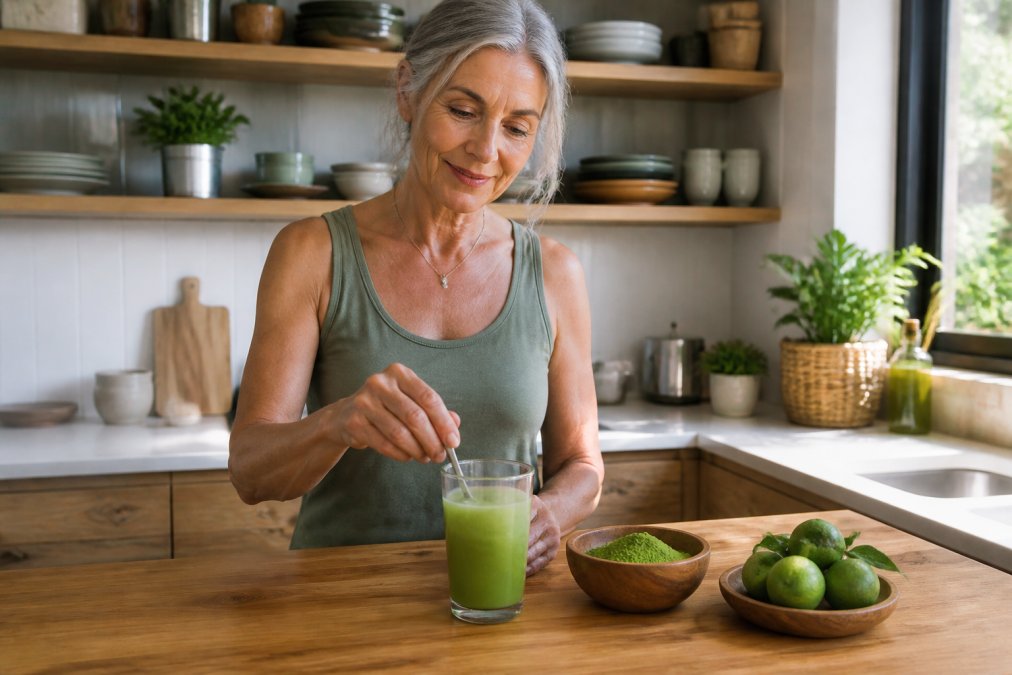
A few practical notes:
- Add powder to cool or room-temperature liquids; heat degrades vitamin C
- Stir into smoothies, yogurt, or oatmeal if the tart flavor is too strong in plain water
- Store the pouch sealed, cool, and away from direct light
Dosage, Safety, and Bioavailability Considerations
Dosage and safety guidelines deserve more attention than most guides give them. Kakadu plum powder is concentrated, and more is not better. Keep to the serving on the label unless a qualified professional advises otherwise. High vitamin C intake can cause digestive upset in some people, and anyone with a history of kidney stones should be cautious with large doses.
Nitric Oxide Production Support and Cardiovascular Health
Cardiovascular health depends heavily on healthy blood vessels, and healthy blood vessels depend on nitric oxide. The body produces this signaling molecule through two main pathways, and the enzyme at the center of the inner-pathway route is endothelial nitric oxide synthase, or eNOS. This is the body's own enzyme, and it should not be confused with ėNOS, the powdered drink from Australiana Life named after it.
Sourcing, Sustainability, and What to Look For
Sourcing is where kakadu plum products separate quickly, and it is the topic most guides skip entirely. The fruit is wild-harvested in northern Australia during a short window that typically runs from late in the dry season into the early wet season. Supply is limited, seasonal, and dependent on the health of wild tree populations. That scarcity creates room for diluted, blended, or mislabeled powders.
Why Ethical Sourcing Is a Quality Issue, Not Just an Ethical One
Most kakadu plum on the global market is harvested by or in partnership with Indigenous communities whose connection to these trees predates any commercial supply chain. When that relationship is handled well, two things happen at once: harvesters are paid fairly and given a stake in long-term land management, and the product itself becomes more consistent.
What to Check Before Buying
- The ingredient is listed as Terminalia ferdinandiana, not a generic "plum extract" or "kakadu plum flavor"
- The powder is freeze-dried rather than heat-dried
- The supplier states where and when the fruit was harvested, ideally naming the region and the season
- Third-party testing for purity, heavy metals, and microbial safety is mentioned, not just claimed
- The brand describes its relationship with Indigenous harvesters or land managers, rather than treating the fruit as an anonymous commodity
- The label discloses whether the powder is 100% kakadu plum or blended with fillers, carriers, or other fruit powders
A Note on Wild Harvest vs. Cultivation
Almost all commercial kakadu plum is still wild-harvested, because the tree has not been widely domesticated. That is part of what makes the fruit special, but it also means sustainability depends on harvest practices rather than farm management. If a label is silent on all of this, that silence is itself information.
Conclusion
Getting meaningful nutrition from kakadu plum comes down to three things: a concentrated, honestly labeled powder, a sensible daily dose, and realistic expectations about what a food can do. The vitamin C, ellagic acid, and phenolic compounds are real and well documented. The cardiovascular and skin benefits build slowly, through consistency rather than intensity. If you are managing a heart condition or taking prescription medication, speak with your doctor before adding any new supplement, and treat botanical support as one part of a broader healthy routine.
Frequently Asked Questions
Are Kakadu plums the world's healthiest fruit?
Kakadu plums are among the most nutrient-dense fruits known, largely because of their exceptional vitamin C concentration. They also contain phenolic compounds like gallic acid and ellagic acid, which contribute to their high antioxidant capacity. While no single food is 'the healthiest,' Kakadu plum's combination of vitamin C, phytochemicals, and prebiotic fiber makes it a standout superfood for immune system support and cellular repair.
What are the side effects of Kakadu Plum?
Kakadu plum is generally well tolerated when consumed in food amounts. High doses of vitamin C from any source can cause digestive upset in some people. If you take blood thinners or have a medical condition, talk to your healthcare provider before adding concentrated kakadu plum powder to your routine, since vitamin C can affect how some medications work.
How does the vitamin C content in Kakadu plum compare to other fruits?
Kakadu plum contains one of the highest natural vitamin C concentrations of any fruit, far exceeding oranges and even most berries. This ascorbic acid content supports collagen synthesis, immune function, and antioxidant defense. The fruit's vitamin C works alongside its phenolic compounds.
How should Kakadu plum be incorporated into a daily health regimen?
Kakadu plum powder mixes easily into water, smoothies, or yogurt. A typical serving is small, often a teaspoon or less, because of its intense vitamin C content. For cardiovascular support, pair it with a formula that addresses nitric oxide production support, such as one containing L-arginine and L-citrulline. Always follow product labels and consult your doctor before starting new supplements.
ėNOS was built for exactly that routine. It is a doctor-designed daily powdered drink that supports the body's own nitric oxide production through dual pathways, combining L-Arginine and L-Citrulline with antioxidant-rich Australian botanicals including Kakadu Plum and Davidson's Plum. If you want a foundational heart and cardiovascular supplement that fits into a single glass of water each morning, get started with ėNOS and give your circulation the daily support it deserves.