
 blog
How to Choose Nutrients for Maintaining Mental Sharpness
Last Updated: November 22, 2026
Quick Summary
Nutrients for maintaining mental sharpness are the vitamins, minerals, fats, and plant compounds your brain relies on for memory, focus, and concentration. Many work partly through blood flow, and nitric oxide supports that delivery system, the science ėNOS is built around.
- Fatty fish, leafy greens, berries, eggs, and nuts and seeds cover most key nutrient gaps.
- Nitric oxide helps blood vessels widen, supporting blood flow to the brain through two main routes.
- ėNOS is a powdered drink, not a pill, taken as one scoop twice daily, 12 hours apart.
- Supplements fill gaps rather than replace food, and mega-doses of some vitamins can cause harm.
- Adults over 50 may absorb B12 less efficiently and may need fortified foods or alternatives.
Table of Contents
- Key Nutrients for Maintaining Mental Sharpness
- Brain Food for Memory and Concentration: Practical Sources and Serving Sizes
- What Are the Top 5 Brain Foods? A Quick List for Adults
- The Role of Nitric Oxide in Cognitive Function
- Vitamins, Minerals, and Antioxidants: What the Evidence Shows
- How to Build a Daily Plate for Mental Clarity
- Where Supplements Fit, and What to Watch For
- Frequently Asked Questions
Key Nutrients for Maintaining Mental Sharpness
Nutrients for maintaining mental sharpness are the vitamins, minerals, fats, and plant compounds your brain relies on for memory, focus, and concentration. Many work partly through blood flow, and nitric oxide supports that delivery system, the science ėNOS is built around.
Brain Food for Memory and Concentration: Practical Sources and Serving Sizes
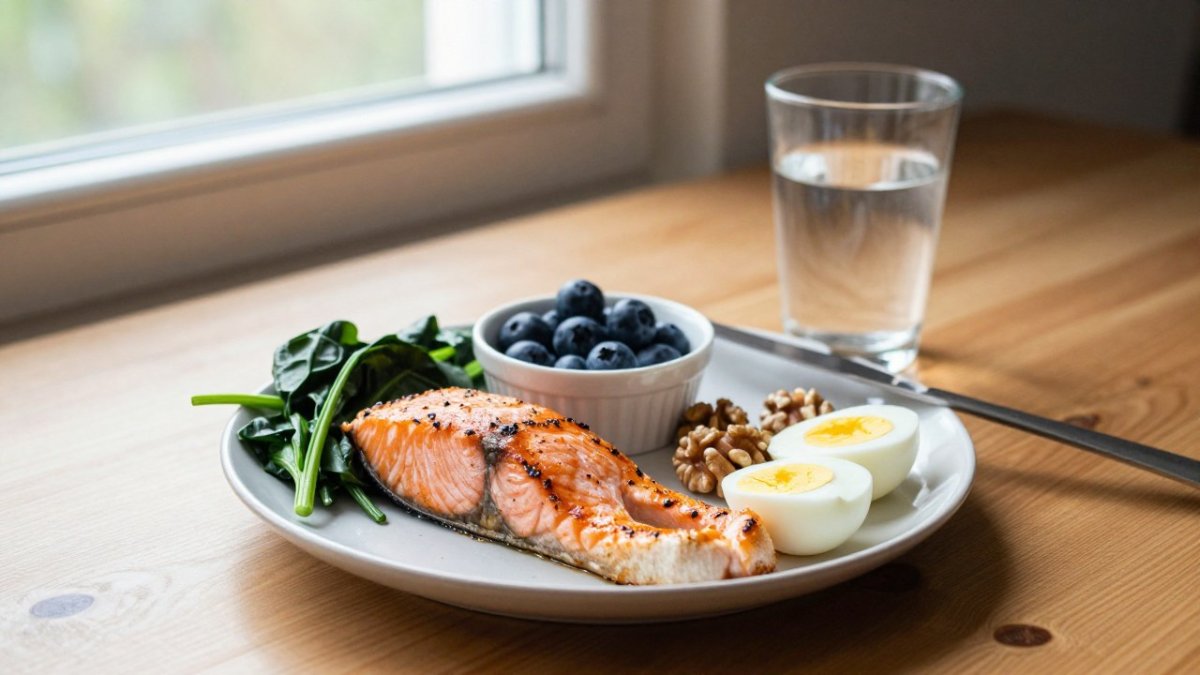
Brain food for memory and concentration means whole foods rich in omega-3s, B vitamins, antioxidants, and minerals, eaten in consistent daily portions. Fatty fish such as salmon, sardines, and mackerel supply DHA and EPA; eggs, leafy greens, beans, and fortified grains provide B6, B12, and folate, while berries, nuts, and colorful vegetables supply antioxidants.
What Are the Top 5 Brain Foods? A Quick List for Adults
The top five brain foods for adults are fatty fish, leafy greens, berries, eggs, and nuts and seeds, which together cover most key nutrient gaps.
For more, read our guide to nitric oxide and brain health, our list of foods that support natural nitric oxide production, and our holistic guide to cognitive support.
The Role of Nitric Oxide in Cognitive Function
Nitric oxide is a short-lived gas your body produces to help blood vessels widen, supporting blood flow to the brain through two main routes: the eNOS enzyme, short for endothelial nitric oxide synthase, and the nitrate-nitrite pathway from foods like beets and leafy greens. eNOS is your body's own enzyme; ėNOS is the name of the branded supplement product, a powdered drink, not a pill, the two are not the same thing.
Our ėNOS formula pairs L-Arginine and L-Citrulline with antioxidant-rich botanicals, including Kakadu Plum and Davidson's Plum, to support nitric oxide delivery through dual pathways. Take one scoop twice daily, 12 hours apart, to keep production steady; if twice a day isn't possible, take two scoops in the morning, 30 minutes before eating. Avoid significant protein at the same time, since protein can inhibit nitric oxide production. You can shop the ėNOS nitric oxide formula.
Here are the key details about nitric oxide support and the ėNOS product as the article describes them.
| Item | Value | Note |
|---|---|---|
| eNOS | Endothelial nitric oxide synthase | The body's own enzyme |
| ėNOS | Branded supplement product | A powdered drink, not a pill |
| ėNOS formula | L-Arginine and L-Citrulline plus botanicals | Includes Kakadu Plum and Davidson's Plum |
| Standard dosing | One scoop twice daily, 12 hours apart | Keeps production steady |
| Alternative dosing | Two scoops in the morning | 30 minutes before eating |
| Timing caution | Avoid significant protein at the same time | Protein can inhibit nitric oxide production |
Vitamins, Minerals, and Antioxidants: What the Evidence Shows
Evidence for individual nutrients is strongest for deficiency correction and more modest for boosting an already adequate diet.
How to Build a Daily Plate for Mental Clarity
Building a plate for mental clarity comes down to three habits: cover the nutrient bases, eat them consistently, and support blood flow. Some adults, including those over 50, may absorb B12 less efficiently, and anyone with dietary restrictions may need alternatives such as fortified foods, algae-based omega-3s, or plant proteins.
Where Supplements Fit, and What to Watch For
Supplements fill gaps rather than replace food; for mental sharpness, the most useful address a genuine shortfall or support a system your diet cannot easily reach, such as steady nitric oxide production. More is not better, mega-doses of some vitamins can cause harm, and stacking products can duplicate ingredients. ėNOS is a powdered drink you mix into water, built to support heart and cardiovascular health, and it may be considered alongside other products if you and your healthcare provider decide additional vascular support makes sense.
Your brain depends on healthy circulation, and that makes vascular support a genuine part of staying sharp. ėNOS is our daily formula, built around L-Arginine, L-Citrulline, and rare Australian Outback superfruits to support nitric oxide production, heart health, and natural energy. Take it as a delicious drink, twice daily, and speak with your healthcare provider about your individual needs.
Frequently Asked Questions
What supplements help with mental sharpness?
Supplements that may support mental sharpness include omega-3 fatty acids (DHA and EPA), B vitamins (especially B6, B12, and folate), vitamin D, and antioxidants like vitamin E. These nutrients contribute to cognitive function through various pathways, including cell membrane health and reducing oxidative stress. A nitric oxide supplement like ėNOS may also support cognitive function by promoting healthy blood flow to the brain. However, evidence for each nutrient varies, and supplements should complement a balanced diet. Consult a healthcare provider before starting any new supplement.
What foods can help improve mental sharpness?
Foods linked to mental sharpness include fatty fish (salmon, mackerel) for omega-3s, leafy greens (spinach, kale) for folate and antioxidants, eggs for B vitamins and choline, berries (blueberries) for antioxidants, and nuts/seeds for vitamin E and healthy fats. These nutrient-dense foods support brain function by providing building blocks for neurotransmitters, protecting against oxidative stress, and maintaining healthy blood vessels. Aim for a varied diet that includes these foods regularly, and consider portion sizes that fit your overall calorie needs.
Which nutrients are important for memory and concentration?
Key nutrients for memory and concentration include omega-3 fatty acids (DHA and EPA), B vitamins (B6, B12, folate), antioxidants (vitamin E, vitamin C), and minerals like zinc and magnesium. DHA is particularly important for brain cell membrane structure, while B vitamins support neurotransmitter production and reduce homocysteine levels. Antioxidants help protect brain cells from oxidative stress. A balanced diet rich in fatty fish, leafy greens, eggs, and berries can provide these nutrients. For personalized guidance, consult a healthcare professional.