
 Ultimate guide
Supplement Quality and Safety Standards: A 2026 Guide
Table of Contents
- What Makes a Supplement Safe and High-Quality
- FDA Oversight and the Regulatory Framework for Supplements
- How to Choose High-Quality Supplements
- Third-Party Tested Supplements: What Testing Means
- Reading a Dietary Supplement Label Guide
- Supplement Certificate of Analysis: What It Reveals
- Safety Considerations and Adverse Event Reporting
- Frequently Asked Questions
Last Updated: October 12, 2026
What Makes a Supplement Safe and High-Quality
Understanding supplement quality and safety standards is essential for making informed choices. The difference between a product that delivers real benefit and one that sits unused often comes down to standards most consumers never see.
A high-quality supplement starts with ingredient integrity. Every component must meet strict standards for identity (the ingredient is what the label claims), purity (free from contaminants like heavy metals, bacteria, or fillers), and potency (it contains the stated amount of active compound).
Safety goes beyond individual ingredients to how the product is manufactured, stored, tested, and labeled. At ėNOS, we formulate around the body's own biological pathways, specifically how the endothelial nitric oxide synthase (eNOS) enzyme produces nitric oxide, a vital signaling molecule for cardiovascular health.
Supplement quality isn't always obvious from looking at a bottle. Two products can look identical but differ dramatically in manufacturing standards, testing rigor, and actual ingredient content. Understanding the regulatory framework, manufacturing requirements, and how to read labels is your most practical tool for better choices.
FDA Oversight and the Regulatory Framework for Supplements
The FDA regulates dietary supplements under a different framework than pharmaceutical drugs, shaping how they are manufactured, labeled, tested, and sold in the United States.
Under the Dietary Supplement Health and Education Act (DSHEA), passed in 1994, supplements occupy a middle ground between food and drugs. The FDA does not require pre-market approval as it does for prescription medications; manufacturers bear responsibility for ensuring products are safe and properly labeled. The FDA's role is primarily to monitor the market after products are sold and act if safety problems emerge.
The burden of quality falls on the manufacturer. Reputable companies invest in testing, documentation, and quality control because consumer trust depends on consistent, safe products. Companies cutting corners may skip testing or use cheaper ingredient sources, and those shortcuts often show up in independent testing results.
How DSHEA Changed Supplement Regulation
DSHEA fundamentally shifted supplement regulation in the United States. Before 1994, the FDA treated many supplements as food additives or drugs with stricter pre-market approval requirements. DSHEA created a separate regulatory category, allowing manufacturers to bring products to market more quickly while maintaining safety standards.
The law requires manufacturers to notify the FDA about new dietary ingredients before marketing them, but this notification is not FDA approval. Manufacturers must demonstrate a history of safe use or provide evidence of safety; for ingredients with established use, this requirement is simplified.
DSHEA also required accurate labeling and prohibited drug-like claims. A supplement can claim to "support" heart health but cannot claim to "treat" or "cure" heart disease. Understanding this distinction helps you recognize legitimate structure-function claims versus unsupported overreach.
Good Manufacturing Practices (GMP) Requirements
Good Manufacturing Practices (GMP) are the foundation of supplement quality and safety, covering every aspect of production from raw material testing through manufacturing, packaging, storage, and shipping.
GMP requirements ensure that:
- Raw materials are tested for identity and purity before use
- Manufacturing equipment is properly maintained and cleaned
- Finished products are tested to confirm they contain what the label claims
- Records are kept documenting each batch and its testing results
- Facilities maintain appropriate temperature and humidity controls
- Staff are trained in proper procedures
Supplements manufactured under cGMP (current Good Manufacturing Practices) have undergone third-party audits confirming compliance. This certification doesn't guarantee perfection, but it means the manufacturer has invested in systems designed to catch problems before products reach consumers. Checking for cGMP certification is one of your first quality signals.
How to Choose High-Quality Supplements
Choosing a high-quality supplement requires looking beyond marketing claims to what's actually in the bottle and how it was made. Start by identifying what you're trying to support, then evaluate products designed for that purpose.
Look for transparency in ingredient sourcing and manufacturing. A quality supplement brand will clearly state where ingredients come from, what testing has been performed, and whether the product meets cGMP standards. If a company won't provide this information, that's a red flag.
Consider the formulation itself. A supplement with multiple complementary ingredients working through different pathways often delivers better results than a single-ingredient product.
Price matters, but the cheapest option isn't always the best value. Premium supplements typically cost more because they use higher-quality ingredients, invest in rigorous testing, and maintain stricter manufacturing standards. The difference often shows up in third-party testing results: the premium product delivers what it promises, while the budget option may fall short on potency or contain unexpected contaminants.
Third-Party Tested Supplements: What Testing Means
Third-party testing is one of the most reliable indicators of supplement quality. An independent laboratory verifies that the product contains the ingredients listed on the label in the amounts claimed and is free from harmful contaminants.
Third-party testing confirms identity (the supplement contains what the manufacturer claims), verifies potency (active ingredients are present in stated amounts), and screens for contaminants that could pose health risks. A reputable laboratory provides a Certificate of Analysis documenting its findings.
Not all third-party testing is equal. Look for accredited laboratories following established protocols. Organizations like NSF International and USP (United States Pharmacopeia) are recognized for rigorous, standardized methods; their certification mark means the product has passed their testing requirements.
Common Contaminants and What Tests Detect
Third-party testing screens for several contaminant categories. Heavy metals like lead, cadmium, mercury, and arsenic can accumulate in botanicals, particularly from regions with soil contamination; laboratories use methods like ICP-MS (inductively coupled plasma mass spectrometry) to detect them at very low levels.
Microbial contaminants (bacteria, fungi, and other pathogens) can grow during manufacturing or storage if conditions aren't controlled. Testing identifies E. coli, Salmonella, and other harmful organisms, and also screens pesticide residues to ensure botanicals were grown without excessive chemical use.
Some supplements are tested for undisclosed pharmaceutical ingredients. Some manufacturers illegally add pharmaceutical compounds to enhance effects; third-party testing can detect these adulterants, protecting consumers from unknowingly taking prescription-strength compounds.
Reading a Dietary Supplement Label Guide
The supplement label is your primary source of information about what's in the bottle and how to use it safely. Reading it correctly helps you compare products, identify allergens, and understand the manufacturer's claims.
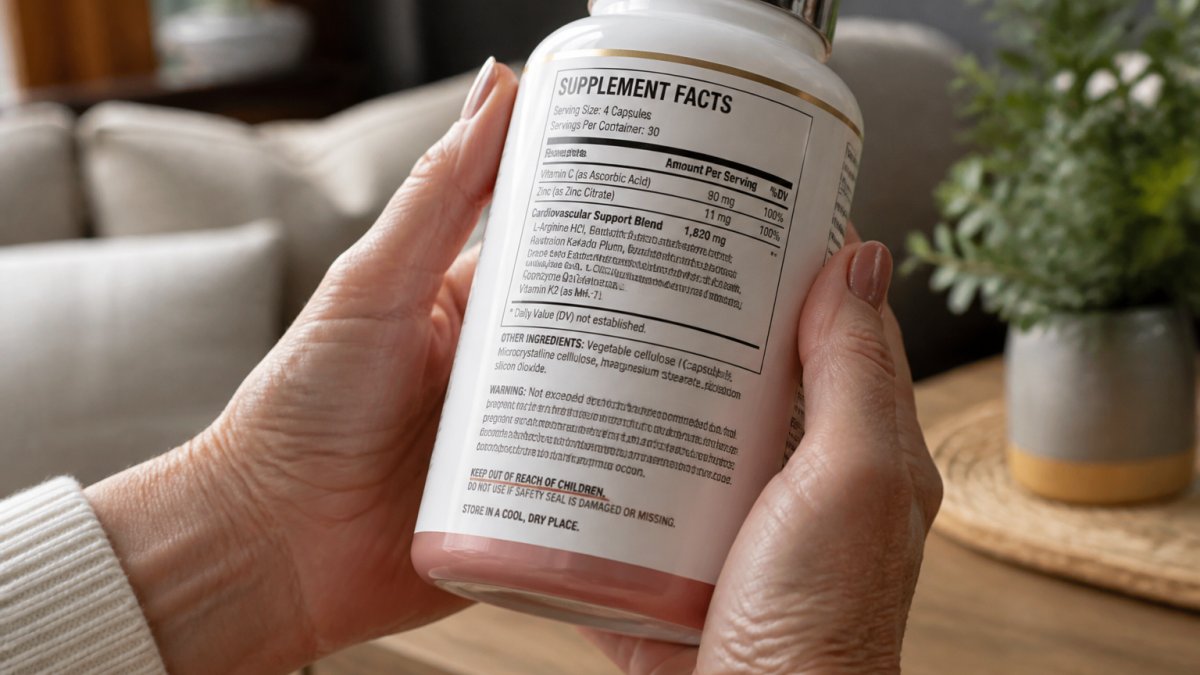
The label contains several key sections: the Supplement Facts panel (each ingredient and amount per serving), the ingredient list (all components in descending order by weight), directions for use, storage instructions, and any FDA-required warnings.
Look at the serving size first. A product might claim a certain amount of an active ingredient, but an unusually large serving size means you're getting less per dose than you might think. Compare serving sizes across products for a fair comparison.
The ingredient list tells you exactly what's in the supplement, including fillers, binders, and other inactive ingredients.
Understanding Structure-Function Claims vs. Health Claims
Label language is carefully regulated. A structure-function claim describes how an ingredient affects normal body structure or function, such as "supports healthy heart function" or "promotes cardiovascular wellness (the FDA)." These are allowed because they describe a normal physiological role.
Health claims, by contrast, state that a product can diagnose, cure, mitigate, treat, or prevent disease, such as claiming a supplement "prevents heart disease" or "treats high blood pressure." Supplements cannot make health claims without FDA approval, which is rarely granted.
This distinction helps you identify compliant marketing versus overreach. If a label claims to "treat" or "cure" a condition, that's a red flag. Legitimate marketing uses careful language like "supports," "promotes," or "helps maintain" rather than definitive disease claims.
Supplement Certificate of Analysis: What It Reveals
A Certificate of Analysis (COA) is a document issued by a testing laboratory that reports the results of testing performed on a specific batch of a supplement.
A complete COA includes several components. The batch number ties the results to a specific production run, so you know exactly which batch was tested.
Look for the potency section, which confirms that the active ingredients are present in the amounts claimed on the label. A potency result of 95-105% of the labeled amount is typical and acceptable.
The contaminant screening section is equally important. This shows testing results for heavy metals, microbial organisms, pesticides, and other potential contaminants. The COA should indicate whether results are below the acceptable limits set by testing standards.
A reputable supplement brand makes COAs readily available. Many companies post them on their website or provide them upon request. If accessing a COA is difficult or impossible, that's a warning sign about the company's commitment to transparency.
Safety Considerations and Adverse Event Reporting
Supplements are generally safe for most people when used as directed, but they're not risk-free. Understanding potential safety considerations helps you use supplements responsibly and recognize when something isn't working as expected.
Some supplements can interact with medications. If you're taking prescription drugs, particularly blood thinners, blood pressure medications, or immunosuppressants, certain supplement ingredients might affect how your medications work.
Adverse event reporting is how the FDA monitors supplement safety after products are on the market. If you experience an adverse reaction to a supplement, you can report it to the FDA through their MedWatch program (the FDA).
Quality supplements from reputable manufacturers are designed with safety in mind.
Choosing the right supplement means looking beyond marketing claims to examine quality standards, manufacturing practices, and third-party testing. The investment in a higher-quality supplement often pays dividends in results. When you understand what makes a supplement safe and high-quality, you can make choices that support your long-term health with confidence.
Frequently Asked Questions
How can you tell if a dietary supplement is high quality?
High-quality supplements meet Good Manufacturing Practices (GMP) standards, carry third-party certification marks, and include a supplement facts panel with complete ingredient information and amounts. Check the label for certification seals from recognized testing organizations, verify the manufacturer's contact information, and look for evidence of batch testing.
What does third-party testing mean for supplements?
Third-party testing means an independent laboratory (not the supplement manufacturer) tests the product to verify that it contains what the label claims and is free from harmful contaminants. These tests check for purity, potency, and composition. Certification marks from recognized testing organizations indicate the supplement has passed rigorous quality standards. This independent verification helps consumers identify supplements that meet consistent quality and safety benchmarks.
Are dietary supplements approved by the FDA before they are sold?
No. Unlike drugs, dietary supplements do not require FDA approval before they are marketed. The FDA oversees supplements under the Dietary Supplement Health and Education Act (DSHEA), which places responsibility on manufacturers to ensure products are safe and accurately labeled. The FDA can take action against unsafe or misbranded supplements after they reach the market. Manufacturers must follow Good Manufacturing Practices and report adverse events, but premarket approval is not required.
What should you look for on a supplement label?
Look for a supplement facts panel listing each ingredient and its amount per serving, the manufacturer's name and address, batch or lot numbers, expiration dates, and any warning statements about allergens or interactions. Check for third-party certification marks and seals. Distinguish between structure-function claims (what the supplement does in the body) and health claims (which are more heavily regulated). Ensure the label includes contact information so you can report concerns.
What does a certificate of analysis tell you about a supplement?
A certificate of analysis (CoA) is a detailed report from laboratory testing showing that a specific batch of supplement has been verified for identity, potency, and purity. It confirms that the product contains the ingredients listed on the label in the stated amounts and is free from specified contaminants such as heavy metals, bacteria, and molds. A CoA provides batch-specific data and is a strong indicator that the manufacturer is committed to quality control and transparency.
How can you assess supplement safety and possible interactions?
Review the supplement label for warning statements and ingredient lists. Research each ingredient to understand its known effects and potential interactions with medications or other supplements. Consult with a healthcare provider before starting any new supplement, especially if you take prescription medications or have existing health conditions. The FDA monitors adverse events reported by consumers and healthcare professionals through its MedWatch system. If you experience side effects, report them to the FDA so the agency can track safety patterns across the supplement market.
How can you check whether a supplement has been tested for contaminants?
Look for third-party certification marks on the label from organizations that conduct independent testing. If a company cannot or will not provide testing results, that is a red flag about the product's quality assurance practices.