 Ultimate guide
Why Polyphenols Are Essential for Healthy Aging
Last Updated: November 12, 2026
Quick Summary
Polyphenols are plant compounds that help your body manage oxidative stress and support normal inflammatory balance, and their role grows more important with age. Getting them from a varied, plant-forward plate with berries, green tea, coffee, legumes, nuts, and olive oil supports circulation and everyday vitality. Diversity of sources matters more than volume, so aim for color and variety at every meal.
- The main polyphenol classes are flavonoids, phenolic acids, stilbenes, and lignans, and each behaves differently in the body.
- There is no official daily requirement for polyphenols in the United States, so aim for a plant-rich dietary pattern instead of a milligram target.
- Anthocyanins are sensitive to heat, so fresh or lightly cooked berries retain more than heavily stewed ones.
- Lignans and many flavonoids require gut bacterial conversion, so microbiome diversity shapes how much you actually get.
- ėNOS is a powdered drink taken twice daily about 12 hours apart to help keep nitric oxide production steady.
Table of Contents
- What Polyphenols Do in the Body as You Age
- Polyphenol-Rich Foods That Support Healthy Aging
- How Much Polyphenols Per Day Do You Actually Need?
- Polyphenols Benefits for Skin and Everyday Vitality
- Polyphenols Side Effects and Who Should Take Care
- Building a Daily Polyphenol Routine with ėNOS
- Frequently Asked Questions
What Polyphenols Do in the Body as You Age
Polyphenols are a broad family of plant compounds that help the body manage oxidative stress and support normal inflammatory balance, and their role grows more important with age. This guide from ėNOS explains what polyphenols do, where to find them, and how to build a practical daily routine.
The main classes are flavonoids (found in berries, tea, and citrus), phenolic acids (coffee, whole grains), stilbenes (grapes, red wine), and lignans (flaxseed, sesame). Each class behaves differently in the body, and the subclasses matter too:
- Flavonoids break down further into anthocyanins (berries, dark cherries), flavan-3-ols (green tea, cocoa), flavonols (onions, kale), and flavanones (citrus). Anthocyanins are the pigments behind deep red and blue produce.
- Phenolic acids include hydroxycinnamic acids such as chlorogenic acid (coffee, apples) and hydroxybenzoic acids such as gallic acid (tea, berries). These are among the most abundant polyphenols in the typical diet.
- Stilbenes are best known through resveratrol in grapes and red wine, though concentrations in food are modest compared with supplements.
- Lignans are converted by gut bacteria into enterolactone and enterodiol, which is why microbiome health shapes their activity.
Aging changes the picture. Endothelial function, the lining of your blood vessels, tends to decline over the decades, and nitric oxide production often follows. For a closer look at the biology, see why nitric oxide production changes with age.
Beyond circulation, polyphenols are studied in relation to several hallmarks of aging:
- Oxidative stress: polyphenols can act as direct antioxidants, and research is examining their indirect effects on the body's own antioxidant defenses.
- Inflammaging: chronic low-grade inflammation rises with age, and researchers study how polyphenol-rich diets relate to inflammatory markers.
- Cellular senescence: senescent cells accumulate with age; researchers are studying how some polyphenols act on them in cell and animal models.
- Mitochondrial function: researchers are studying how certain polyphenols relate to energy metabolism in preclinical work.
- Gut microbiota: most polyphenols reach the colon, where bacteria convert them into metabolites, so the microbiome is part of the picture.
A useful way to read the evidence is by study type. Cell and animal studies show plausible mechanisms; human observational studies link polyphenol-rich diets to favorable cardiovascular and cognitive outcomes; randomized controlled trials in humans are fewer and often use varied doses and biomarkers.
Polyphenol-Rich Foods That Support Healthy Aging
The most practical way to get dietary polyphenols is a varied, plant-forward plate. A common approach is to aim for color and variety at every meal rather than chasing a single "superfood."
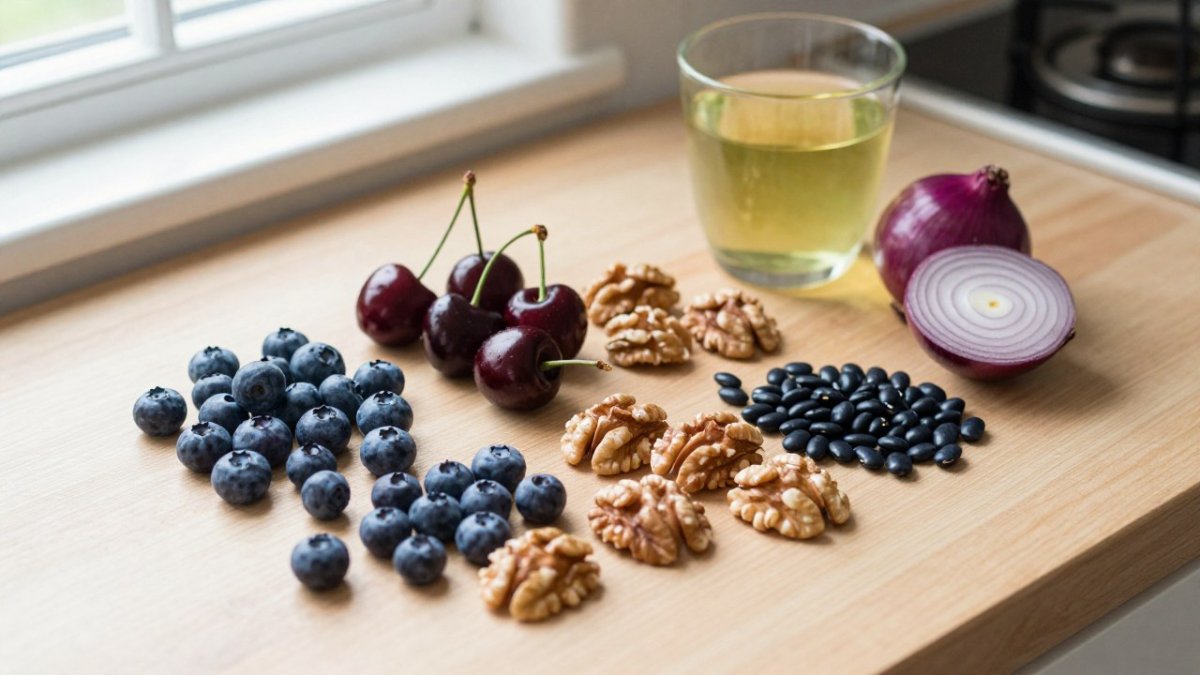
Strong sources include:
- Berries: blueberries, blackberries, strawberries
- Dark cherries and plums
- Walnuts and almonds
- Black beans and other legumes
- Red onion, spinach, and dark leafy greens
- Green tea, coffee, and extra virgin olive oil
A serving example: a half-cup of blueberries with breakfast, a handful of walnuts as a snack, and a cup of green tea in the afternoon covers several classes in one day. For a fuller food list, see foods that support natural nitric oxide production.
The article groups its strongest polyphenol sources by food type, so here is a quick scan of what to put on the plate.
| Food group | Examples named in the article | Polyphenol class highlighted |
|---|---|---|
| Berries | Blueberries, blackberries, strawberries | Anthocyanins (flavonoids) |
| Dark fruit | Dark cherries and plums | Anthocyanins (flavonoids) |
| Nuts | Walnuts and almonds | Not specified |
| Legumes | Black beans and other legumes | Not specified |
| Vegetables | Red onion, spinach, dark leafy greens | Flavonols (flavonoids) |
| Drinks | Green tea, coffee, extra virgin olive oil | Flavan-3-ols, chlorogenic acid |
| Grapes | 100% grape juice, red wine | Stilbenes (resveratrol) |
| Seeds | Flaxseed, sesame | Lignans |
How Much Polyphenols Per Day Do You Actually Need?
There is no official daily requirement for polyphenols in the United States, so how much polyphenols per day you need is best framed as a pattern rather than a number. Many researchers and dietitians describe benefits from a diet rich in plant foods rather than a specific milligram target.
In practice, that means:
- Several servings of vegetables and fruit daily
- Legumes or whole grains most days
- Nuts, seeds, and olive oil as regular fats
- Tea or coffee in moderation
To translate that into a day, here is one realistic example:
- Breakfast: ½ cup blueberries on oatmeal, plus a cup of green tea
- Lunch: a salad with red onion, spinach, and chickpeas, dressed with extra virgin olive oil
- Snack: a handful of walnuts and an apple
- Dinner: black beans with roasted vegetables, plus a small glass of 100% grape juice or a few dark cherries
That pattern touches all four classes, flavonoids from berries, tea, and onion; phenolic acids from coffee, apple, and whole grains; stilbenes from grapes; and lignans from flaxseed if you add a spoonful to the oatmeal. A common mistake is eating the same three foods daily. Diversity matters more than volume.
Individual variation is real. Bioavailability, how much of a compound your body actually absorbs and uses, differs by food, by preparation, and by person. Cooking, gut microbiota, and genetics all influence the outcome. A few practical points:
- Food form matters: anthocyanins are sensitive to heat and processing, so fresh or lightly cooked berries retain more than heavily stewed ones.
- Gut microbes matter: lignans and many flavonoids require bacterial conversion, so microbiome diversity shapes the yield.
- Pairing matters: polyphenols are often better absorbed with a modest amount of fat, and some compete with each other for absorption pathways.
- Genetics matter: enzyme variants affect how quickly individuals clear certain polyphenols.
That is why whole-food patterns tend to outperform isolated doses. If you are considering a supplement, treat it as a complement to food, not a replacement. For a fuller food list, see foods that support natural nitric oxide production.
Polyphenols Benefits for Skin and Everyday Vitality
Polyphenols are often discussed in relation to skin and daily energy, largely through their antioxidant activity. The skin is exposed to oxidative stress from sun and environment.
Everyday vitality is linked to blood flow, and healthy endothelial function supports delivery of oxygen and nutrients to tissues. The science here is still developing, and results vary from person to person.
What most guides miss is that consistency matters more than intensity. A modest daily habit sustained over months is generally more useful than occasional large doses.
Polyphenols Side Effects and Who Should Take Care
Polyphenols from food are generally well tolerated. Very high intakes from concentrated supplements may cause digestive discomfort in some people.
A brief note on safety: if you take prescription medication, including blood pressure medication, check with your doctor or pharmacist before adding a concentrated polyphenol or nitric oxide supplement. This is a sensible precaution.
Food first, supplement second. If you have a diagnosed condition or are managing early-stage cardiovascular concerns, a conversation with your clinician is the right starting point.
Building a Daily Polyphenol Routine with ėNOS
A workable routine combines food and, where you choose, a supplement. Here is one way to structure it:
- Morning: berries or citrus with breakfast, plus one scoop of ėNOS mixed into water
- Midday: a colorful salad or legumes with lunch, green tea after
- Evening: vegetables with dinner and a second scoop of ėNOS, roughly 12 hours after the first
That twice-daily, 12-hours-apart timing helps keep nitric oxide production steady in the bloodstream. If twice a day isn't possible, two scoops in the morning, taken 30 minutes before eating, works as an alternative. Avoid eating significant protein at the same time, since protein can inhibit nitric oxide production.
ėNOS is a powdered drink, not a pill. To understand the formula, read why ėNOS delivers a myriad of health benefits, or buy ėNOS for current pricing and availability.
Polyphenols are one piece of a larger picture: circulation, endothelial function, and nitric oxide all shape how you feel as you age. ėNOS is designed as a foundational daily heart and cardiovascular support supplement, with a doctor-designed formula built around rare Australian botanicals and amino acids.
Frequently Asked Questions
What food has the highest polyphenols?
Cloves and dried herbs top the list by weight, but everyday servings matter more than raw rankings. Dark berries, black beans, walnuts, flaxseed, red onion, and brewed green tea deliver solid amounts per typical portion. Coffee and dark chocolate also contribute for many people. The practical move is variety: rotate berries, legumes, nuts, and colorful vegetables across the week rather than relying on one hero food. That spread also feeds gut microbiota, which influences how polyphenols are absorbed and used.
Can you have too many polyphenols in your diet?
Food-based intake is generally well tolerated, but concentrated supplements can push past what the body needs. Very high doses may cause digestive upset in some people. If you take prescription medication, check with your doctor before adding a high-dose polyphenol supplement, since some compounds affect how drugs are metabolized. Whole foods remain the safest base, with supplements used as a complement rather than a replacement.
How long before polyphenols make a difference?
Timelines vary by person, dose, and outcome measured. Timelines vary, and research on these effects is still developing. There is no guaranteed schedule, and results depend on your overall diet, activity, and health status. A steady daily habit, built around polyphenol-rich foods and a consistent supplement routine, gives the best chance of noticing gradual improvements in energy and vitality.
Are polyphenols good for you as you age?
Research is examining links between dietary polyphenols and cardiovascular health, cognitive function, and inflammatory balance, all of which matter more with age. Human evidence is promising but not definitive for lifespan extension, so treat polyphenols as one pillar of healthy aging alongside movement, sleep, and medical care. A doctor-designed nitric oxide supplement such as ėNOS, built around L-arginine, L-citrulline, and Australian botanical antioxidants, can round out a polyphenol-rich diet.