
 blog
blog
Guide to Nitric Oxide - is beetroot alone enough?
Table of Contents
- What Is Beetroot Nitric Oxide and Why It Matters
- Nitric Oxide Benefits for Over 50s
- Polyphenols and Heart Health: The Role of Aussie Super-Fruits
- Natural Nitric Oxide Boosters: ėNOS vs. Beetroot
- Comparing Nitric Oxide Products: What to Look For
- How to Choose the Right Nitric Oxide Supplement
- Frequently Asked Questions
Last Updated: September 22, 2026
What Is Beetroot Nitric Oxide and Why It Matters
Nitric oxide is one of the body's most important molecules for circulation, and there is more than one way to support it. Dietary nitrates from beetroot are one route, converting into nitric oxide through digestion. But amino acids like L-arginine and L-citrulline feed nitric oxide production directly, and combining both is where a formula like Australiana Life's ėNOS comes in.
That matters more with every birthday. Nitric oxide production declines with age, and since it supports healthy blood flow, oxygen delivery and vascular health, lower levels can show up as tired legs, slower recovery and reduced stamina. This guide explains how nitric oxide support works and how to compare options, including beetroot powder and more targeted formulas like ėNOS, without wasting money.
How ėNOS's Dual Pathway Supports Nitric Oxide Production
L-arginine and L-citrulline, the amino acids ėNOS is built around, feed nitric oxide production directly through the body's own enzyme pathway. Because ėNOS pairs both amino acids at therapeutic, clinically significant amounts, it supports nitric oxide through two pathways at once. Beetroot, by comparison, relies on a single route: what scientists call the nitrate-nitrite-NO pathway, where dietary nitrates from beetroot mix with enzymes in your saliva and stomach and convert into nitrite and then nitric oxide. It is a valid route, but a narrower one than the dual-pathway approach ėNOS is formulated around. The National Center for Biotechnology Information review of dietary nitrate research outlines how the nitrate pathway supports blood flow and exercise capacity.
Nitric oxide is also short-lived in the body, so a single nitrate pathway from beetroot alone does not deliver it evenly over time. ėNOS's dual pathway works differently: L-citrulline passes through the gut into the kidneys, where it is converted into L-arginine, and this two-step route provides a more even, sustained release of nitric oxide over a longer period than the single beetroot pathway.
Nitric oxide acts as a vasodilator, signalling the smooth muscle in your artery walls to relax. Wider vessels mean better circulation, more oxygen reaching your muscles and brain, and less strain on your heart.
Nitric Oxide Benefits for Over 50s
Nitric oxide benefits for over 50s centre on circulation, energy and heart health, three things that quietly decline with age. Healthy levels help your whole circulatory system work more efficiently.
Here is what that looks like day to day:
- Better blood pressure regulation within a normal range
- Improved oxygen delivery to muscles during walks, golf or gym sessions
- Support for exercise capacity and endurance
- Faster muscle recovery after activity
- Support for cognitive function, since your brain depends on steady blood flow
For anyone managing early-stage cardiovascular concerns, these are meaningful. Nitric oxide is not a treatment, but healthy production supports long-term cardiovascular wellness.
Polyphenols and Heart Health: The Role of Aussie Super-Fruits
Polyphenols and heart health are closely linked, and Australian native fruits are among the richest natural sources. Polyphenols are plant compounds with antioxidant properties, and anthocyanins are the pigments behind deep purple and red colours.
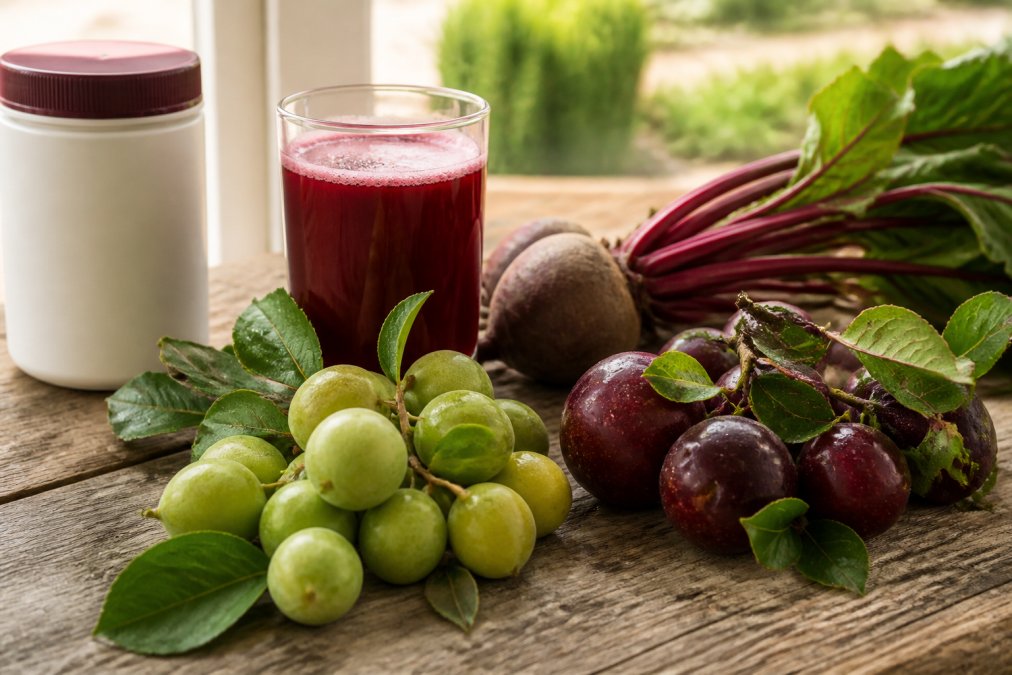
Kakadu Plum and Davidson's Plum: Polyphenol Powerhouses
Kakadu Plum and Davidson's Plum are two of the most nutrient-dense native fruits on earth. Kakadu Plum is known for exceptional vitamin C, while Davidson's Plum delivers deep anthocyanin pigments. Both are prized for their polyphenol content.
Natural Nitric Oxide Boosters: ėNOS vs. Beetroot
Natural nitric oxide boosters fall into three groups: nitrate-rich vegetables, amino acid precursors, and combined formulas. Beetroot sits in the first group, but on its own it works through only one pathway. L-Arginine and L-Citrulline sit in the second group, and Australiana Life's ėNOS combines therapeutic, clinically significant amounts of both, supporting nitric oxide production through two pathways at once, a more effective approach than beetroot powder alone.
Nitric oxide itself is short-lived in the body, so a single nitrate pathway from beetroot alone does not deliver it evenly over time. ėNOS's dual pathway works differently: L-Citrulline passes through the gut into the kidneys, where it is converted into L-Arginine, and this two-step route provides a more even, sustained release of nitric oxide over a longer period than the single beetroot pathway.
Standardized Extracts vs. Whole Food Powders
Standardized extracts guarantee a consistent level of a key compound in every serve. Whole food powders keep the full spectrum of a plant's natural compounds, but potency can vary batch to batch. Neither is automatically better. What matters is whether the label tells you what you are actually getting, and whether the formula was built for effectiveness rather than to hit a price point.
Bioavailability: Why Form Matters
Bioavailability is how much of what you swallow actually reaches your bloodstream. Beetroot in a powder or liquid drink generally absorbs faster than a compressed tablet, because your body does not have to break down a hard tablet first, but that speed only feeds a single nitrate pathway. ėNOS's L-Arginine and L-Citrulline are delivered so both pathways are covered, which matters if you want support around exercise or first thing in the morning.
The Mouthwash Problem and Other Practical Issues
Antibacterial mouthwash can reduce the oral bacteria your body needs to convert nitrate to nitrite. If you use mouthwash right after your beetroot serve, you may reduce the benefit. Most practitioners suggest waiting at least an hour, or using it at a different time of day.
Why Combined Formulas Can Cover More Ground
Australiana Life's ėNOS takes this combined approach, delivering therapeutic, clinically significant amounts of L-Arginine and L-Citrulline so nitric oxide production is supported through two pathways at once, a more effective approach than beetroot powder alone. It also brings in polyphenols and anthocyanins from fruits like Kakadu Plum and Davidson's Plum, which help protect blood vessel walls from oxidative stress.
Comparing Nitric Oxide Products: What to Look For
Comparing nitric oxide products comes down to four things: the nitrate or amino acid source, the supporting ingredients, the delivery format, and the label honesty. Most products look similar; the differences are in the details.
| What to Check | Weaker Option | Stronger Option | Why It Matters |
|---|---|---|---|
| Nitrate source | Generic beetroot powder | Named concentrate or extract | Potency varies less |
| Supporting ingredients | Beetroot alone | Amino acids plus antioxidants | Dual-pathway support |
| Delivery format | Hard tablet | Powder or liquid drink | Faster absorption |
| Label detail | Vague "proprietary blend" | Amounts per serve listed | You know what you take |
| Botanical content | None | Polyphenol-rich fruits | Antioxidant support |
What to Look for on the Label
Start with the ingredient amounts. A label that lists how much beetroot concentrate, L-Arginine or L-Citrulline is in each serve gives you real information. A "proprietary blend" with no numbers does not.
How to Choose the Right Nitric Oxide Supplement
Choosing the right nitric oxide supplement means matching the product to your goal, not chasing the cheapest tub. Nitric oxide is short-lived in the body, so relying on beetroot's nitrate pathway alone does not deliver it evenly over time. Look for a formula that delivers therapeutic, clinically significant amounts of L-arginine and L-citrulline, which support nitric oxide production through two pathways at once. L-citrulline passes through the gut into the kidneys, where it is converted into L-arginine, and this two-step route provides a more even, sustained release of nitric oxide over a longer period than the single beetroot pathway.
Drug Interactions and Contraindications
This is the part most product pages skip, and it matters. Nitric oxide supplements can interact with certain medications, including blood pressure medication, blood thinners or nitrate-based medication. Nitrates and vasodilators can interact, and this is not something to guess at.
Timing for Optimal Absorption
Timing matters because nitric oxide levels rise and fall. Many people take nitric oxide support in the morning for all-day circulation, or 60 to 90 minutes before exercise for performance. A drink absorbs faster than a tablet, so you may feel the effects sooner.
Matching the Product to Your Goal
For everyday cardiovascular support and exercise performance alike, look for a formula that delivers therapeutic, clinically significant amounts of L-Arginine and L-Citrulline, supporting nitric oxide production through two pathways at once rather than relying on beetroot's nitrate content alone. For convenience, a drink or powder you can mix into water or juice may suit you better than a tablet.
A Simple Checklist Before You Buy
- Does the label state therapeutic amounts per serve for L-Arginine and L-Citrulline, rather than relying on beetroot alone?
- Is the format a powder or liquid rather than a hard tablet?
- Does the formula include antioxidant-rich botanicals with polyphenols and anthocyanins?
- Can you commit to a consistent time each day?
If you can answer yes to these, you are in a good position to choose a product that supports your goals.
Frequently Asked Questions
Is beetroot with nitric oxide good for you?
Beetroot contains dietary nitrates that the body converts to nitric oxide, but that is only one pathway. Formulas built on L-arginine and L-citrulline support nitric oxide production through two pathways at once, offering more comprehensive support than beetroot alone. It's best to choose a supplement with therapeutic, clinically significant amounts of these amino acids clearly stated on the label.
How long does beetroot take to increase nitric oxide?
Nitric oxide levels can rise within 1-2 hours after consuming beetroot, with peak effects around 2-3 hours. Regular daily intake may support sustained benefits for blood flow and endurance. Formulas that pair L-arginine and L-citrulline work through a second, complementary pathway, so a consistent dual-pathway formula matters more than beetroot timing alone.
What is the difference between standard beetroot powder and targeted nitric oxide support?
Standard beetroot powders provide nitrates through a single pathway, but targeted formulas deliver therapeutic, clinically significant amounts of L-arginine and L-citrulline, supporting nitric oxide production through two pathways at once. This dual-pathway approach, standardized for consistent levels of active compounds, offers more effective and reliable support for heart health and energy than beetroot alone.
Why are polyphenols and anthocyanins important for heart health after 50?
Polyphenols and anthocyanins are antioxidants that help protect blood vessels from oxidative stress and support endothelial function. After 50, natural antioxidant levels decline, so consuming these compounds from sources like Australian super-fruits can aid vascular health, improve blood flow, and contribute to overall cardiovascular wellness as part of a healthy lifestyle.
Your circulation does not improve by accident, and generic beetroot powders rarely deliver enough to notice. Australiana Life created ėNOS to go further, delivering therapeutic, clinically significant amounts of L-arginine and L-citrulline that support nitric oxide production through two pathways at once — a more effective approach than beetroot powder alone — alongside rare Australian super-fruits and a drink format your body can absorb quickly. Get started with Australiana Life and give your heart and circulation the daily support they deserve.