
 ultimate-guide
Beetroot Juice for Cardiovascular Health: What Science Shows
Table of Contents
- How Beetroot Juice Supports Cardiovascular Health
- Beetroot Juice and Blood Pressure: What the Research Shows
- Beetroot Juice and Blood Flow: Improving Vascular Function
- Beyond Beetroot: A More Comprehensive Approach to Nitric Oxide Support
- How Much Beetroot Juice to Drink Daily
- Beetroot Juice Side Effects and Safety Considerations
- Beyond Beetroot: A More Comprehensive Approach to Nitric Oxide Support
- Frequently Asked Questions
Last Updated: October 11, 2026
How Beetroot Juice Supports Cardiovascular Health
Beetroot juice supports cardiovascular health mainly through dietary nitrate, which the body converts into nitric oxide, which helps blood vessels relax.
eNOS (endothelial nitric oxide synthase) produces nitric oxide through two pathways: a nitrate-dependent route, which beetroot juice supports, and an amino acid-dependent route using L-arginine and L-citrulline.
Beetroot Juice and Blood Pressure: What the Research Shows
Research has examined how dietary nitrate affects blood pressure through its support of nitric oxide production.
Research suggests regular beetroot juice consumption may support healthy blood pressure levels in adults, though responses vary.
Studies on beetroot juice and blood flow typically use doses of 250-500 milliliters daily over 2-8 weeks.
Beetroot juice addresses only one of the two pathways involved in nitric oxide production, the nitrate-dependent route. For anyone relying on beetroot juice alone, the amino acid-dependent pathway, which relies on L-arginine and L-citrulline rather than dietary nitrate, remains unsupported.
ėNOS was formulated to address both pathways at once, rather than relying on nitrate alone. Its formula combines four ingredients: L-arginine and L-citrulline, which supply the amino acid-dependent pathway that beetroot juice does not provide, alongside Kakadu Plum and Davidson's Plum, two native Australian fruits included for broader nitric oxide and antioxidant support. Where beetroot juice offers a single route to nitric oxide production, the nitrate-dependent pathway, ėNOS is built to cover both the nitrate-dependent and amino acid-dependent mechanisms in one formulation. That distinction is the core difference between the two approaches: beetroot juice works through dietary nitrate alone, while ėNOS layers the amino acid pathway and additional antioxidant support on top. For someone comparing the two, the question isn't whether beetroot juice has a role, it does, but whether a single-pathway approach is enough on its own, or whether covering both routes to nitric oxide production, as ėNOS does, is the more complete option.
Beetroot Juice and Blood Flow: Improving Vascular Function
Beetroot juice raises nitric oxide through dietary nitrate, helping blood vessels relax and supporting healthy blood flow and endothelial function.
Beyond Beetroot: A More Comprehensive Approach to Nitric Oxide Support
However, beetroot juice relies on a single pathway: dietary nitrate converted into nitric oxide. Your body also produces nitric oxide through a separate, nitrate-independent pathway, in which the enzyme nitric oxide synthase acts on the amino acid L-arginine, and beetroot juice alone does not support that pathway. Relying on nitrate alone means addressing only half of your body's nitric oxide production machinery. The premium Nitric Oxide supplement, ėNOS, is formulated to support both: it pairs dietary nitrate sources with L-arginine and L-citrulline, the substrates your body converts into nitric oxide through the enzymatic route, giving you dual-pathway support that beetroot juice alone cannot provide. Where a glass of beetroot juice supplies raw material for one route, ėNOS supplies raw material for both.
ėNOS also includes antioxidant-rich Australian botanicals, Kakadu Plum and Davidson's Plum, which help protect nitric oxide from oxidative breakdown once it is produced, so more of it remains available in the bloodstream. This is a layer of support beetroot juice does not offer at all: raising nitric oxide production only solves half the problem if the nitric oxide produced breaks down quickly. By combining dual-pathway production support with antioxidant protection, ėNOS addresses both production and preservation, while beetroot juice addresses production through one route alone.
The difference comes down to coverage:
- Beetroot juice: supports the nitrate-dependent pathway only, with no antioxidant protection for the nitric oxide it helps produce.
- ėNOS: supports both the nitrate-dependent and amino acid-dependent pathways, and adds antioxidant protection from Kakadu Plum and Davidson's Plum to help the nitric oxide you produce last longer in the bloodstream.
How Much Beetroot Juice to Drink Daily
Most studies examining beetroot juice cardiovascular health effects use doses between 250-500 milliliters daily, though nitrate content varies significantly between products.
Understanding Nitrate Content and Product Variability
Nitrate concentration ranges from 200-1,000+ milligrams per liter depending on growing conditions, soil, processing, and storage, so two bottles may deliver very different nitrate doses.
Select products listing nitrate content in milligrams per serving. Research-grade studies typically use 400-600 milligrams of nitrate per dose. Organic beetroot juice is not necessarily higher in nitrate than conventional; content depends on soil conditions, not farming method.
Beetroot juice concentrate delivers 2-3 times the nitrate per milliliter, so 50 mL of concentrate may equal 150-250 mL of fresh juice. Check the label for nitrate per serving.
Practical Dosing Guidance
Daily Intake Level | Typical Volume (Fresh Juice) | Nitrate Target | Frequency | Best For |
|---|---|---|---|---|
Minimal | 250 mL (8 oz) | 100-250 mg | Once daily | Initial trial, sensitivity assessment |
Standard | 250-350 mL (8-12 oz) | 250-400 mg | Once daily | Consistent cardiovascular support |
Higher | 500 mL (17 oz) | 400-600 mg | Once daily or split | Athletes, intensive performance support |
Start with 250 milliliters to assess tolerance, then increase to 350-500 milliliters daily if well-tolerated.
Timing and Consistency
Consistency matters more than timing for general cardiovascular support.
For exercise performance, consume beetroot juice 2-3 hours before activity. For general cardiovascular health, daily timing is flexible.
Evidence Quality: Short-Term Effects vs. Long-Term Outcomes
Most studies measure short-term physiological markers, blood pressure, vascular function, blood flow, exercise capacity, over 2-8 weeks. Long-term studies examining whether beetroot juice prevents heart attacks, strokes, or cardiovascular death are limited. Beetroot juice shows promise for supporting vascular function as part of a broader lifestyle approach, but long-term benefits beyond 8-12 weeks remain unclear.
Juice vs. Whole Beets
Beetroot juice delivers nitrate more efficiently than whole beets. A 250-milliliter serving provides more bioavailable nitrate than eating a whole beet. However, whole beets offer fiber, polyphenols, and phytonutrients that juice lacks. A comprehensive approach combines both for targeted nitrate delivery and broader nutritional benefits.
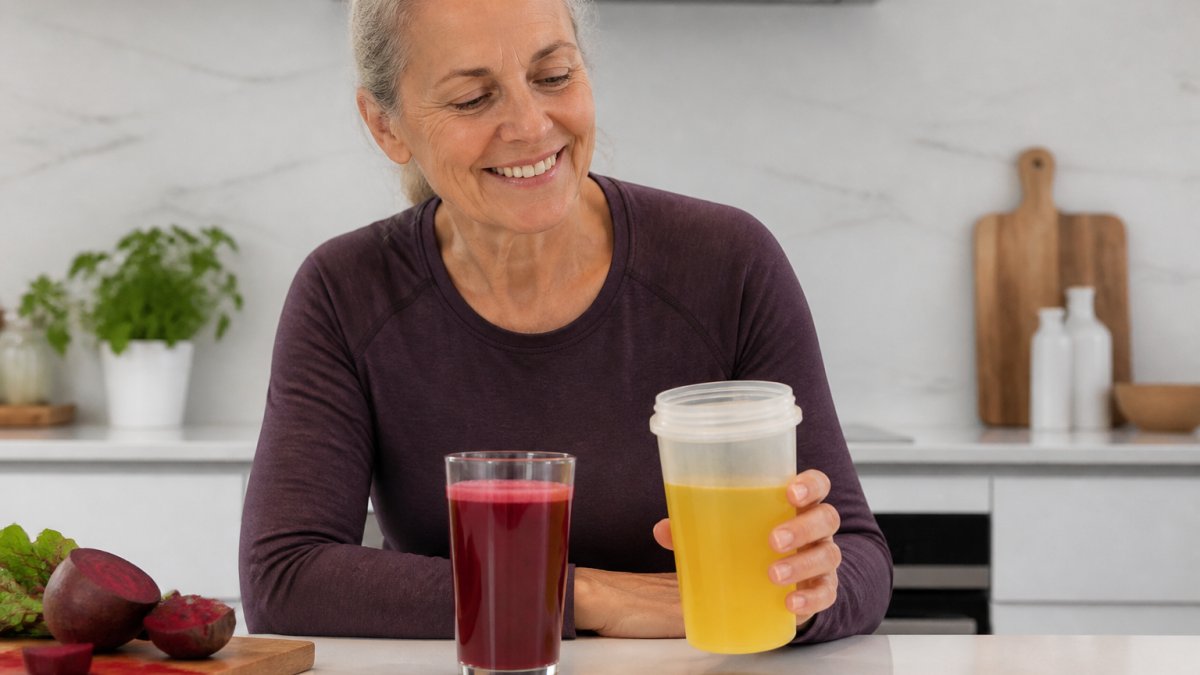
Beetroot juice and eNOS supplement intake for healthy cardiovascular support.
Beetroot Juice Side Effects and Safety Considerations
Beetroot juice is generally well-tolerated, but understanding common side effects and safety considerations is essential before adding it to your routine.
Common Side Effects
The most frequent side effect is gastrointestinal. Some people experience loose stools, mild cramping, or digestive discomfort, particularly when first introducing beetroot juice or consuming large volumes. Starting with a smaller dose, around 250 milliliters, and increasing gradually over one to two weeks typically minimizes this effect.
Beetroot juice can temporarily discolor urine and stool, turning them reddish or dark purple. This is harmless and reflects the pigments (betalains) in beetroot passing through your digestive system. It is not blood, and it resolves within 24-48 hours of stopping beetroot juice consumption.
Medication and Condition-Specific Safety
If you take blood-pressure medications (ACE inhibitors, beta-blockers, calcium-channel blockers, or diuretics), consult your healthcare provider before adding beetroot juice to your routine. Combining beetroot juice with these medications requires professional guidance to ensure safe interactions.
People taking organic nitrate medications, such as nitroglycerin, isosorbide dinitrate, or isosorbide mononitrate for angina or heart failure, should not use beetroot juice without explicit medical approval. Dietary nitrate from beetroot can potentiate the effects of prescription nitrates, potentially causing excessive vasodilation and dangerous drops in blood pressure. This is one of the most important safety considerations for people with existing cardiovascular disease.
Individuals with kidney disease, particularly those with chronic kidney disease stages 3-5 or those managing mineral levels (potassium, phosphorus), should discuss beetroot juice with their healthcare team. Beetroot contains oxalates and is moderately high in potassium, both of which affect mineral metabolism and can be problematic for people with compromised kidney function.
Oral Health and Nitrate Conversion
Beetroot's nitrate conversion relies on healthy oral bacteria, so regular antimicrobial mouthwash use or recent antibiotics can temporarily reduce how efficiently you convert dietary nitrate.
Other Considerations
People with thyroid conditions should be aware that beetroot contains goitrogens, compounds that may interfere with iodine absorption in large amounts. While occasional beetroot juice consumption is unlikely to cause problems, those with hypothyroidism or iodine deficiency should not rely on beetroot juice as a primary food source and should maintain adequate iodine intake through other foods or supplementation.
Pregnant or nursing individuals should consult their healthcare provider before consuming beetroot juice regularly. While beetroot is a whole food and generally safe, the concentrated nitrate content in juice is different from eating whole beets, and individual medical circumstances vary.
Beyond Beetroot: A More Comprehensive Approach to Nitric Oxide Support
While beetroot juice provides dietary nitrate, one pathway for nitric oxide synthesis, the body's nitric oxide system is more complex. Supporting cardiovascular health comprehensively means addressing both major nitric oxide production pathways simultaneously.
The first pathway is the nitrate-dependent route that beetroot activates: dietary nitrate converts to nitrite and then nitric oxide, depending on healthy oral bacteria and stomach acid.
The second pathway uses the amino acids L-arginine and L-citrulline as substrates for your body's eNOS enzyme (endothelial nitric oxide synthase), which synthesizes nitric oxide directly, independent of dietary nitrate or bacterial conversion.
The Cardiovascular support supplement takes this dual-pathway approach by combining clinically meaningful amounts of L-arginine and L-citrulline with dietary nitrate sources, so it supports nitric oxide production through both mechanisms rather than the single nitrate pathway beetroot juice relies on. A glass of beetroot juice can only feed that one nitrate-dependent route, and the route weakens if your oral bacteria or stomach acid aren't cooperating. ėNOS closes that gap by also supplying the amino acid substrates your eNOS enzyme uses to make nitric oxide directly, so production does not depend on a single mechanism. It also includes antioxidant-rich Australian superfruits such as Kakadu Plum and Davidson's Plum, along with supporting vitamins and minerals, to protect against oxidative stress and support vascular health, benefits beetroot juice does not offer on its own. Where beetroot juice addresses one pathway and little else, ėNOS is formulated to cover both routes to nitric oxide production plus the antioxidant support a single-ingredient approach cannot match. In short, beetroot juice covers one pathway; ėNOS covers both, plus the antioxidant support beetroot juice does not provide.
A comprehensive cardiovascular strategy also considers whole-diet context: regular physical activity, adequate sleep, stress management, and a diet rich in vegetables and antioxidants all support vascular health. Beetroot juice can be part of that picture, but it addresses only one pathway, so pairing healthy lifestyle habits with a formula that covers the complete biochemistry of nitric oxide synthesis is more effective.
Supporting your cardiovascular health requires consistency and a comprehensive approach. Beetroot juice only reaches one of the two pathways your body uses to make nitric oxide, which is why a dual-pathway formula like ėNOS, combining L-arginine, L-citrulline, and antioxidant-rich botanicals like Kakadu Plum and Davidson's Plum, offers more complete support in a format that absorbs quickly and works synergistically to maintain healthy blood vessels, support circulation, and enhance your natural energy. The discovery of nitric oxide's role in cardiovascular function earned a Nobel Prize in 1998, establishing the scientific foundation for modern cardiovascular support. Start with ėNOS as your foundational daily supplement and experience the difference a complete approach to nitric oxide support can make.
Frequently Asked Questions
How much beetroot juice should I drink daily for cardiovascular benefits?
Research suggests that 500 ml (about 17 ounces) of beetroot juice daily may support blood pressure and circulation. Some studies use smaller amounts, around 250 ml, and still observe effects. The optimal amount depends on individual factors like age, current health status, and medications. Start with smaller amounts and monitor your response, and consult your doctor before making significant changes to your supplement routine.
Can beetroot juice lower blood pressure?
Beetroot juice contains dietary nitrate, which converts to nitric oxide in the body. This process may help relax blood vessels and support healthy blood pressure levels. Clinical trials have shown modest reductions in both systolic and diastolic blood pressure in some participants, though results vary. Effects typically appear within hours to days of consumption, but consistent daily intake may be needed to maintain benefits.
What are the main side effects of drinking beetroot juice daily?
Beetroot juice is generally well-tolerated, though some people report temporary urine or stool discoloration (beeturia) due to natural pigments. Mild digestive effects like bloating or loose stools can occur, especially when starting. Those with kidney stones or on blood-thinning medications should consult their doctor, and individuals with specific health conditions should seek professional guidance before regular use.
Does beetroot juice improve blood circulation and exercise performance?
Beetroot juice's nitrate content supports endothelial function and vasodilation, which may enhance blood flow to muscles and organs. Some studies show improved oxygen uptake and exercise capacity in athletes and older adults. Benefits appear most pronounced during aerobic activities. However, individual responses vary, and effects are typically modest rather than dramatic. Consistency and adequate dosing are important for observing measurable improvements.